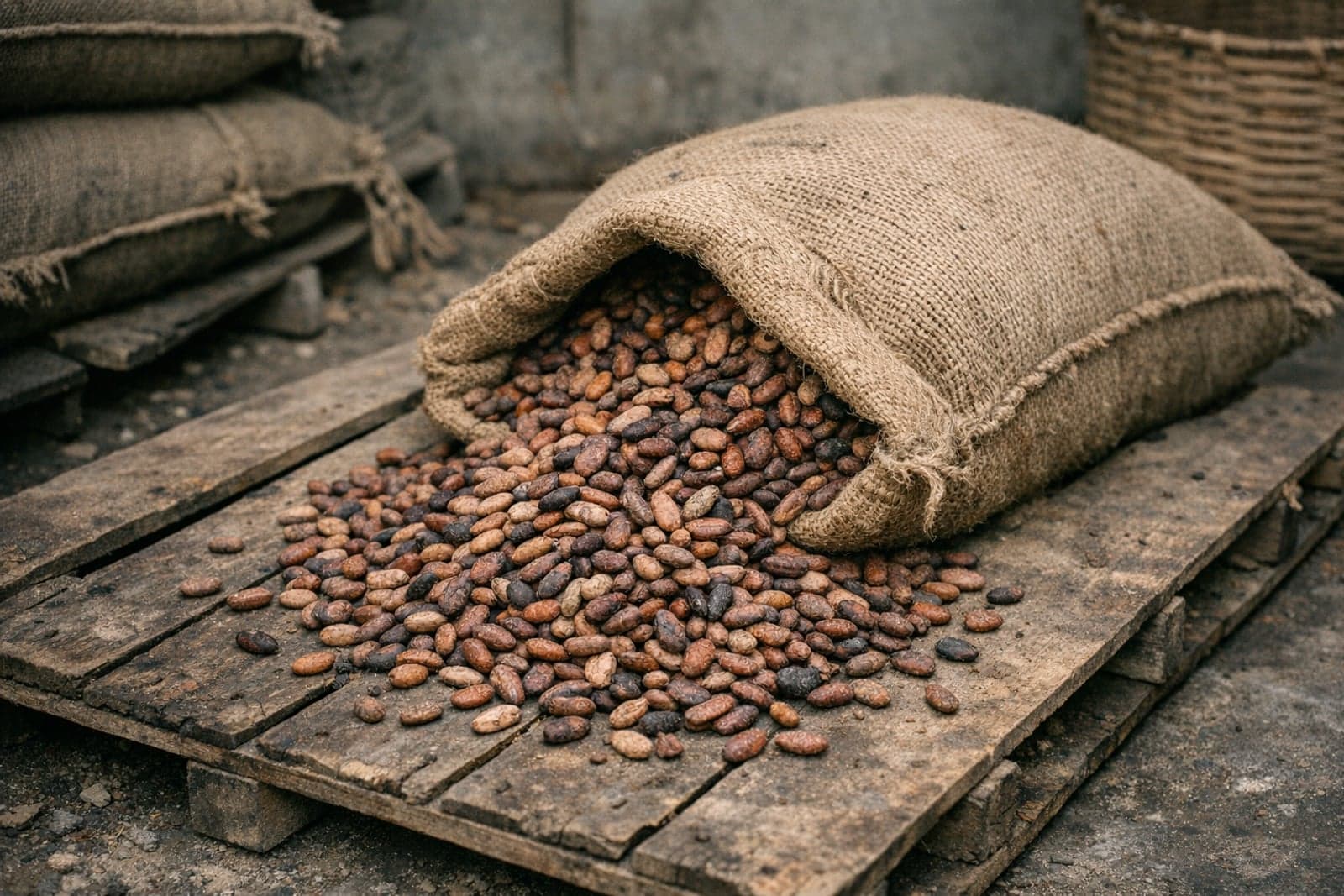
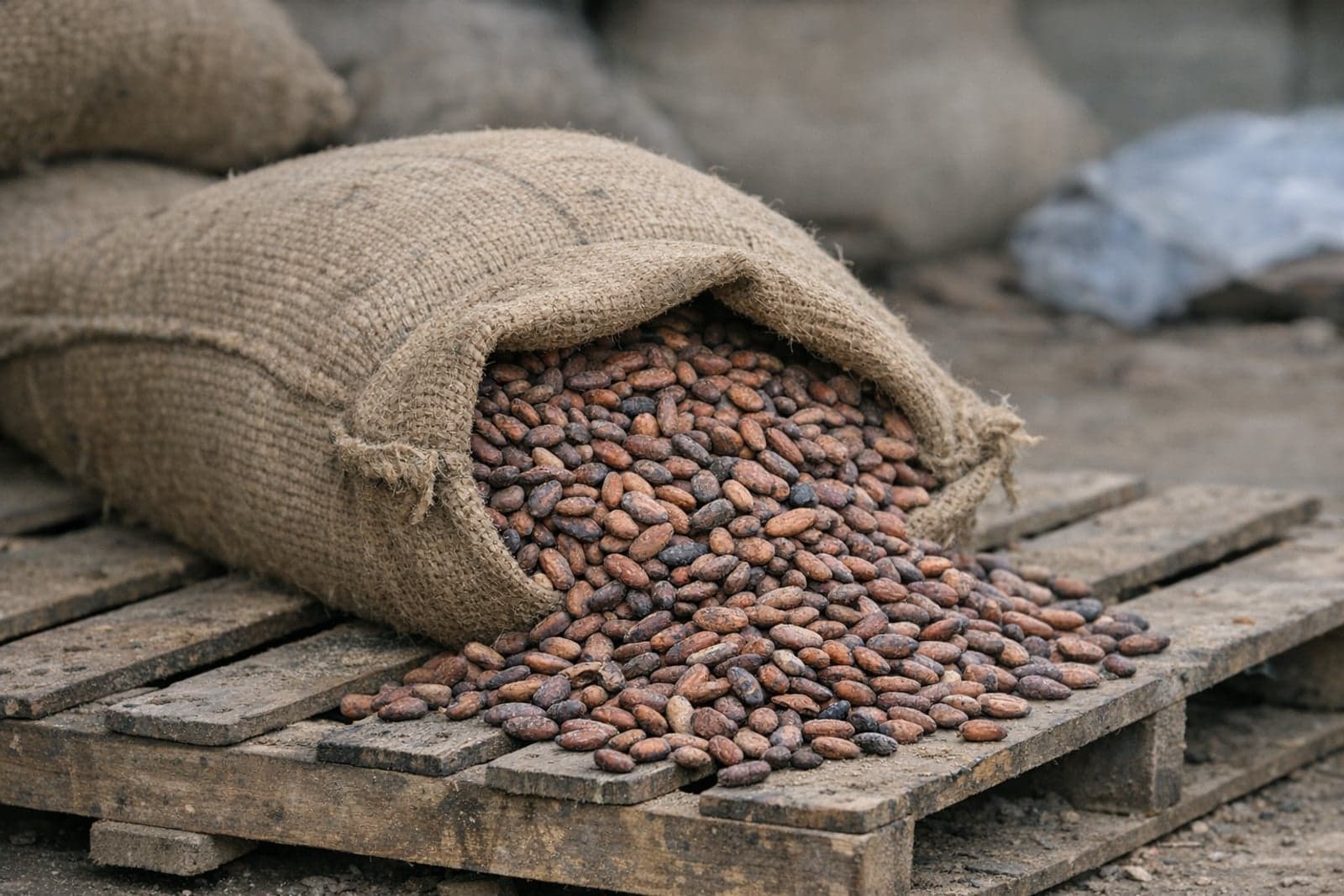
Dependable workhorse lots at a sharper price point, fully documented.
Grade B lots trade a slightly wider size and defect tolerance for a sharper price, without compromising on cleanliness, moisture control, or paperwork. They are a dependable choice for grinders and industrial buyers who value transparent specifications and consistent container-to-container quality.
In this selection
2 products
What Grade B actually means
Our house Grade B maps to a wider SNI size class (typically class C at ≤120 beans per 100 g) with slightly wider defect tolerance than Grade A, at a meaningfully lower price. Moisture stays at or below 7.5% and cleanliness standards match our export baseline. The exact thresholds, including mouldy, slaty, and insect-damaged limits, are printed on the specification sheet so you know the trade-off you are buying.
Value without guesswork
The risk with budget cocoa is not the grade, it is the honesty of the grading. Our Grade B is cut-tested and documented with the same rigour as Grade A, so what arrives at your factory matches the sample and the paperwork. Many of our longest-standing industrial buyers have never needed anything else.
Who buys Grade B
Grinders, butter pressers, and manufacturers of blended or high-sugar products where bean size is invisible in the end result. If your process tolerates a wider size distribution, Grade B delivers the same origin and the same paperwork at a better landed cost per tonne.
Frequently asked questions
Ordering, samples, shipping, and payment, answered by our export desk.
What trade-off defines Grade B on this grade browse page?
Wider SNI size class (often class C at 120 beans per 100 g) and slightly wider defect tolerance than Grade A at a lower price. Moisture stays at or below 7.5% with published mouldy, slaty, and insect-damaged limits.
Who should browse Grade B rather than Grade A lots?
Industrial grinders, butter pressers, and buyers whose downstream process reduces dependence on cup character. Transparent specs matter more than premium bean size when cost per tonne drives the brief.
Do Grade B lots offer lower MOQs than Grade A here?
Yes on unfermented Sulawesi and Java pressing grades: 5 MT partial loads and LCL trials for qualified buyers. Fermented Grade A remains full-container minimum elsewhere in the catalogue.
Will Grade B shipments match the published defect limits on the spec sheet?
Yes. Exact thresholds are printed on every specification sheet and confirmed lot by lot. We do not upgrade substandard deliveries; rejected intake never enters the export stream.
Let’s get a sample in your hands.
Tell us your volume and profile, we’ll ship a graded sample within the week, freight on us.