EUDR Readiness for Indonesian Cocoa to the EU
EUDR applies to cocoa from 30 December 2026. This guide shows EU buyers what farm-to-lot records to request before contracting Indonesian cocoa.
By Aditya WijayaHead of Export SalesSix years structuring Indonesian cocoa programmes for chocolate makers and grinders across Europe and Southeast Asia.
EUDR readiness for Indonesian cocoa is a supplier file issue before it becomes a shipment issue. Under Regulation (EU) 2023/1115, the EU Deforestation Regulation applies to cocoa placed on the EU market from 30 December 2026 (with the later SME application date published in the same regulation for micro and small operators). If the buyer waits until cargo is ready, the hard records may already be difficult to check: origin evidence, lot formation, producer identity, bag marks, and the link between sample approval and the final export lot.
We cannot give EU legal advice, and buyers should confirm formal obligations with their compliance team. What we can do from the export desk is help EU buyers ask practical questions early, so the cocoa lot, quality specification, and export documents are aligned before the purchase order is issued.
What should EU buyers collect before sourcing Indonesian cocoa?
EU buyers should collect traceability, supplier, lot, and shipment records before they approve a cocoa sample or issue a purchase order. The file should connect the offered Indonesian cocoa to the physical lot that will be shipped.
Start with the commercial identity of the product. Ask for the exact product name, origin, process type, grade, proposed volume, packing, Incoterm, and expected shipment window. These fields should later match the proforma invoice, packing list, and bill of lading. If the supplier uses one name in the sample stage and another name in the shipping documents, your receiving and compliance teams will spend time reconciling avoidable differences.
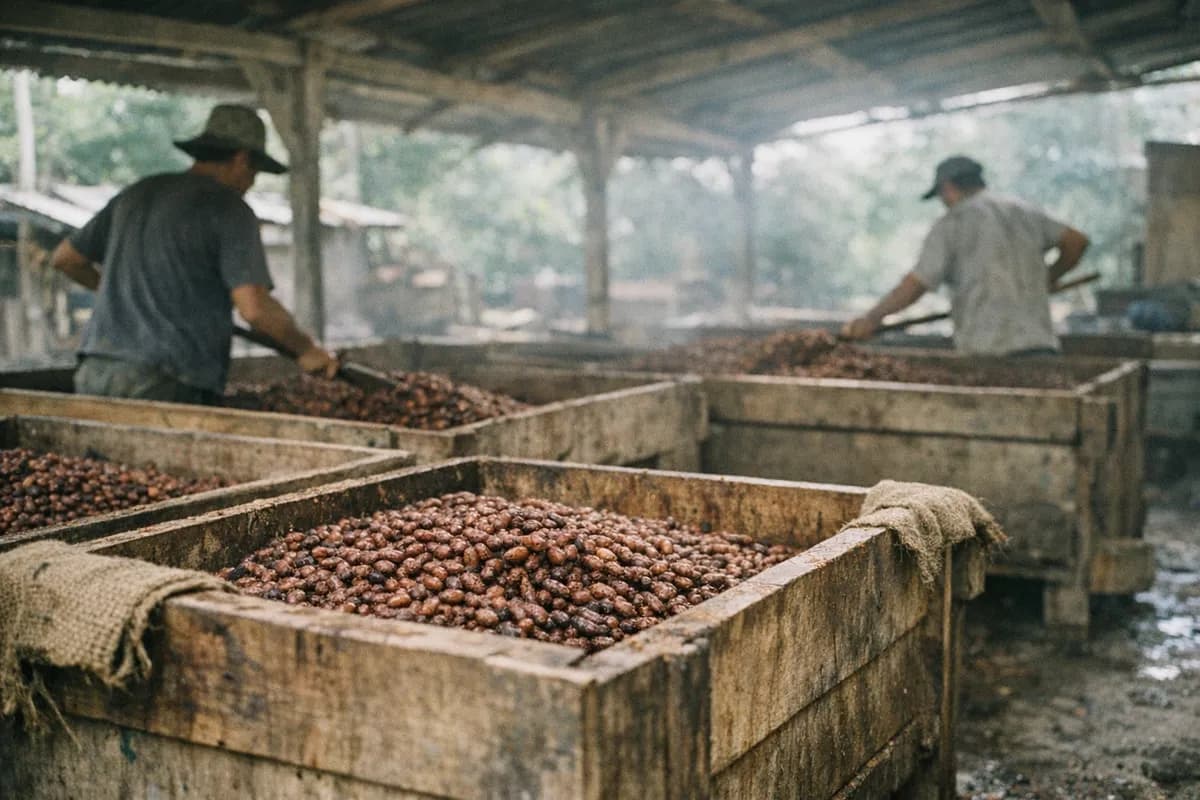
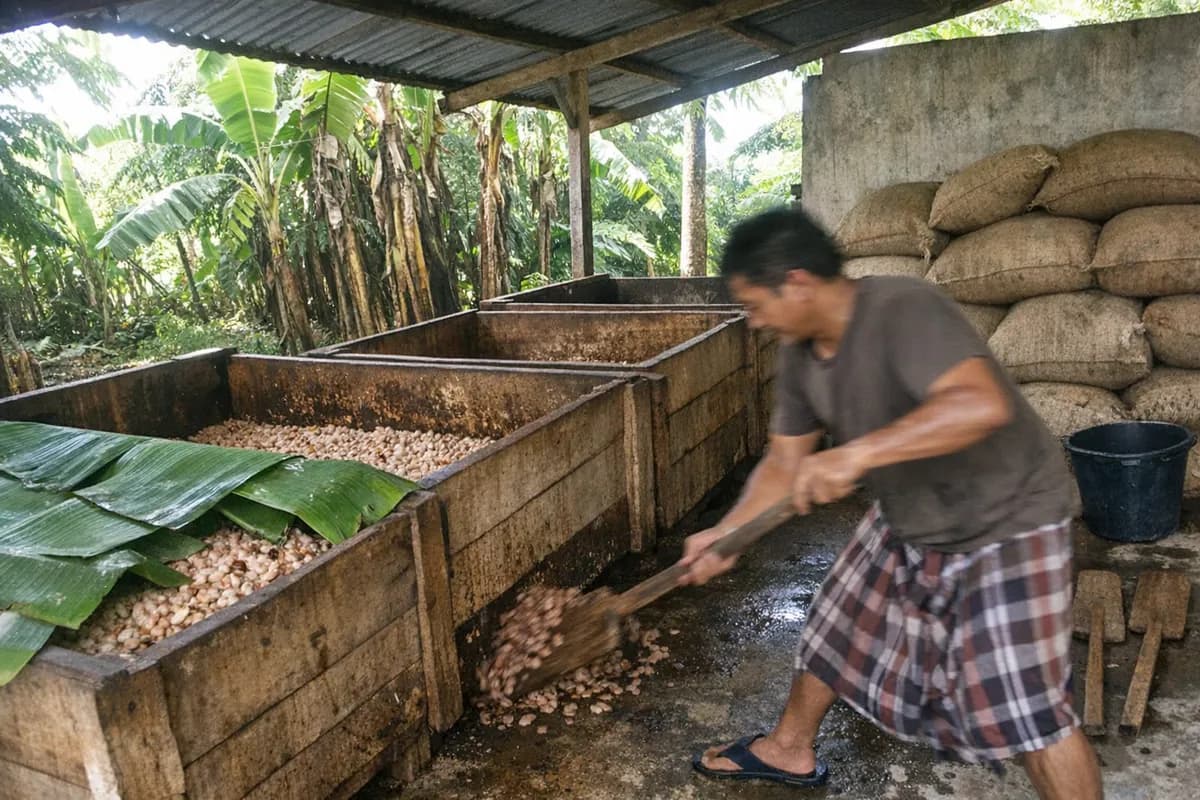
Then ask for origin evidence. For cocoa assembled through cooperatives, buying stations, or collectors, the supplier should be able to explain how beans are received, recorded, graded, stored, and assigned to an export lot. Where plot location data is needed, request it in the format your EU compliance team accepts. Do this before price negotiation becomes final, because the traceability work can affect which lots are suitable for your order.
The EUDR readiness file should also include the supplier’s legal and operational identity: exporter name, address, tax or registration details where applicable, contact person, and the site responsible for grading or packing. This does not prove deforestation status by itself. It gives your procurement team a stable counterparty record and gives your compliance team a starting point for checks.
If you are still comparing origins, review our current Indonesian cocoa bean products and shortlist the process type first. Fermented beans and unfermented beans require different quality evaluation, even when the compliance file follows the same basic structure.
How should plot and lot traceability be linked?
Traceability should run from the production source to the export lot without a break in naming, coding, or document control. A buyer should be able to point to one shipment lot and see which supplier records support it.
In practice, the chain begins with producer or cooperative records. Those records should identify where the cocoa came from and how the supplier collected it. If a shipment lot is built from several inputs, the supplier should show how those inputs were recorded before blending, grading, or bagging. The buyer does not need a long story. The buyer needs a clear audit trail that can be checked.
The next link is the internal lot code. This is where many files become weak. A supplier may have farm records and export documents, but if the code used at intake does not connect to the code used at the warehouse, the shipment file becomes difficult to defend. Ask how the supplier creates lot references, how bags are marked, and how they prevent one lot from being mixed with another after approval.
The final link is the export lot. The sample sent to the buyer should be tied to a lot reference, not treated as a generic representation of future supply. If the sample is only indicative, say so in the buying file and request a pre-shipment sample from the actual lot before cargo release.
For a lot-specific discussion, you can start with Sulawesi Fermented Cocoa Beans, Grade A and send your required traceability fields through our contact page. We can then discuss what is available for the lot being offered, rather than speaking in general terms.
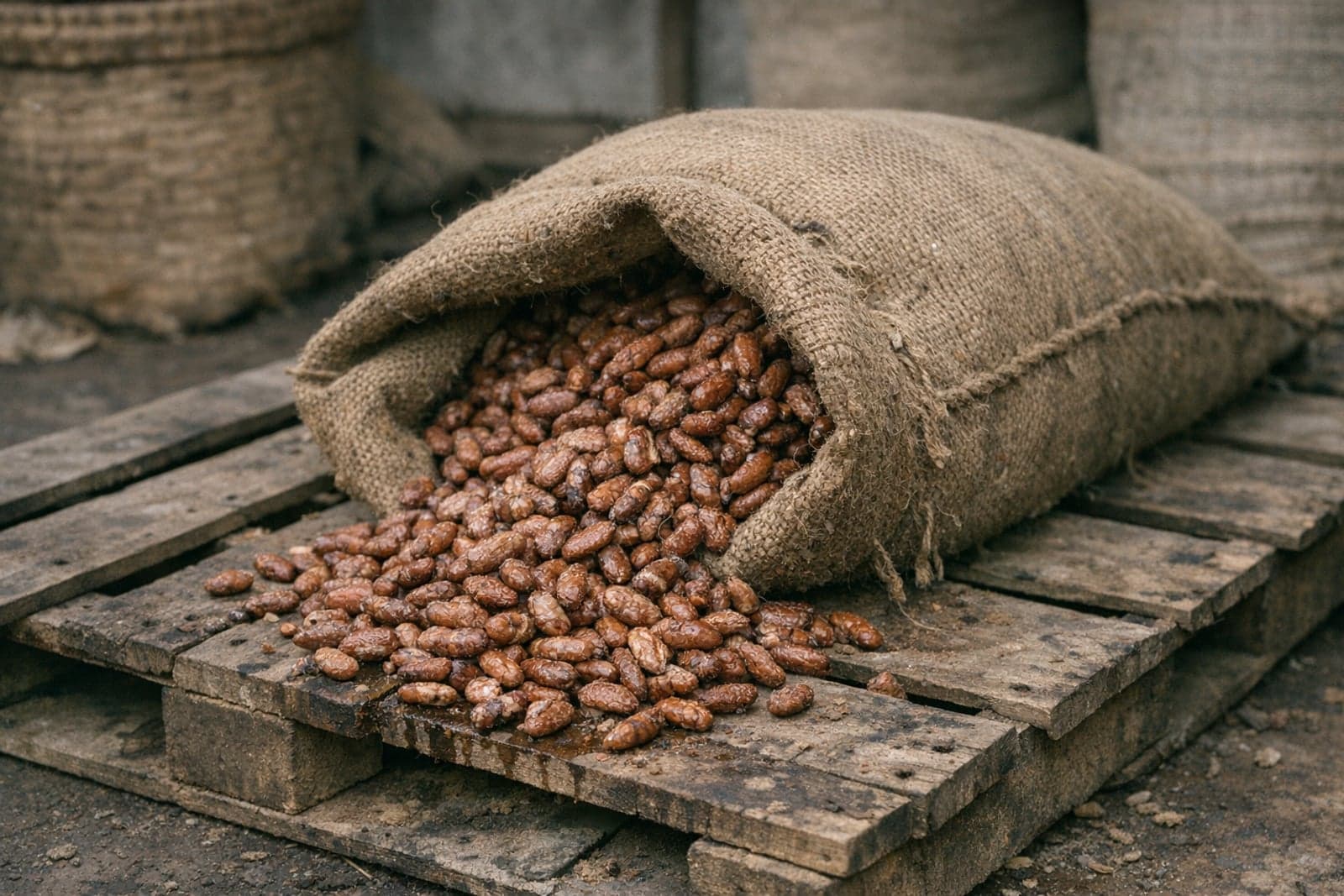
Featured product
Couverture Grade A, Sulawesi Fermented
Bean-to-bar and couverture fermented Sulawesi beans, cut-tested to ≥85% fermentation (house Grade A, SNI size class A).
Rainforest Alliance · ISO 22000 · Halal (BPJPH)
View specificationsWhich cocoa specification should sit beside the EUDR file?
The EUDR readiness file should sit beside a normal cocoa quality specification, not replace it. EU buyers still need measurable controls for bean size, moisture, fermentation, defects, packing, shipment term, and documents.
For example, our Sulawesi Fermented Cocoa Beans, Grade A are specified at bean count ≤ 100 / 100 g (SNI size class A), moisture ≤ 7.5%, fermentation level ≥ 85%, fat content ≥ 52%, mouldy beans ≤ 3%, slaty beans ≤ 3%, insect-damaged beans ≤ 1%, minimum order 13 MT (1 × 20 ft FCL), packing in 60 kg jute bags, lead time of 2–3 weeks, Rainforest Alliance, ISO 22000, and Halal (BPJPH) certifications, FOB, CIF, or CFR terms, and HS code 1801.00.
That quality specification answers a different question from the deforestation file. The quality file tells your factory what it is buying and how to test it. The traceability file tells your compliance team how the lot is linked to its origin records. Both should refer to the same product name and lot reference.
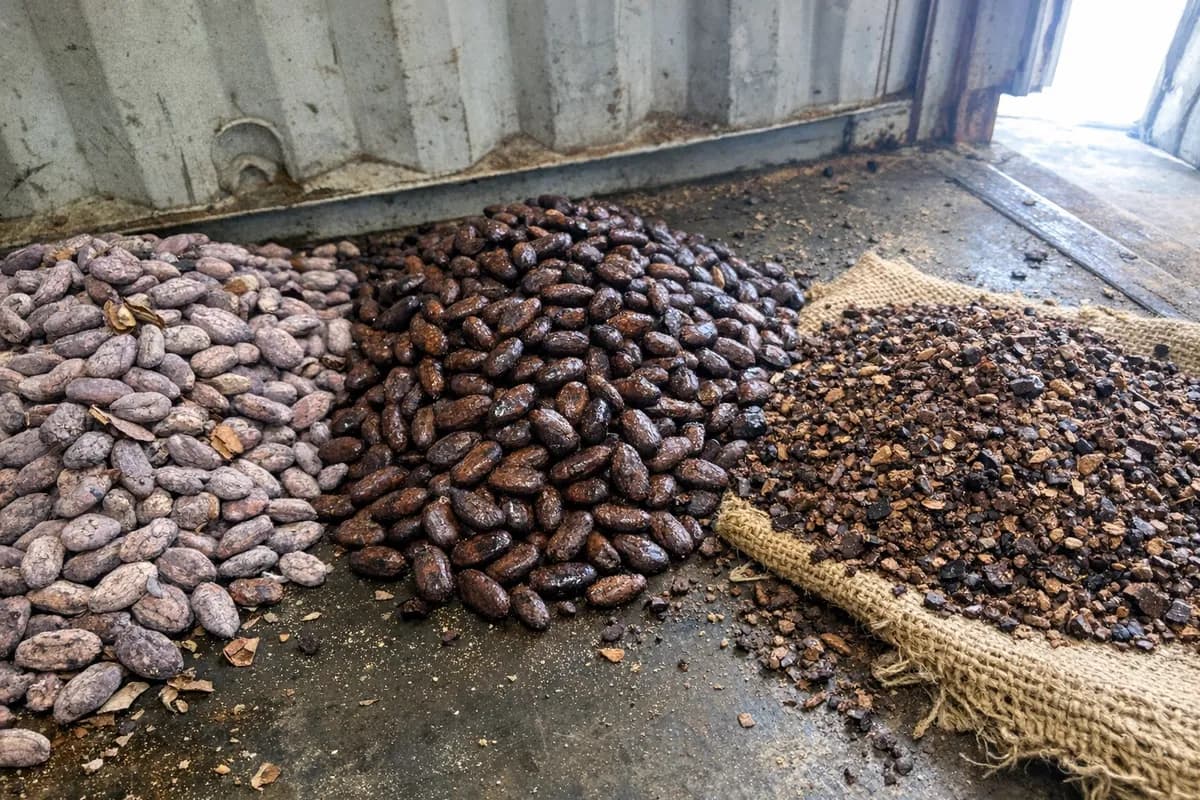
If your application is chocolate production, compare fermented lots first because fermentation level and cut-test appearance affect roasting evaluation. Our fermented Indonesian cocoa beans page is the right starting point for that comparison. If your application is pressing, grinding, or another industrial process where unfermented supply is acceptable, evaluate unfermented cocoa bean options separately instead of treating them as a lower-priced version of the same material.
What is the minimum order and price context for EUDR readiness?
Our fermented Grade A Sulawesi, Sumatra, and Papua beans have a 13 MT minimum order, equal to 1 × 20 ft FCL. Our Java and Sulawesi unfermented Grade B beans have a 5 MT minimum order.
We do not publish a standing price figure for EUDR readiness because the quotation depends on the cocoa grade, process type, packing, Incoterm, volume, certification requirement, shipment timing, and season. Documentation requirements can also affect which physical lots are suitable for the order. A lot that is acceptable for one destination or buyer file may not be acceptable for another buyer’s internal compliance procedure.
Incoterm comparison needs care. Our Indonesian cocoa products are offered under FOB, CIF, or CFR depending on the product. A CIF quote includes a different cost basis from FOB, so buyers should not compare them as if they were the same delivered value. Put the Incoterm in the first enquiry, together with destination port and volume.
Price also needs to be compared against application. Fermented Grade A cocoa and unfermented Grade B cocoa do not serve the same use case. If your buyer file requires a specific origin, process, or certification, state that early. It is better to reject unsuitable lots before sampling than to discover a documentation gap after internal approval.
Send your destination port, volume, preferred Incoterm, product target, and traceability checklist through our contact page for a current quotation. If your compliance team has a required data format, attach it at enquiry stage.
Which shipment documents should EU buyers check before cargo release?
EU buyers should check that every export document carries consistent product, lot, packing, and shipment information. Document matching does not prove deforestation status, but it prevents gaps between the compliance file and the cargo file.
At minimum, compare the proforma invoice, commercial invoice, packing list, certificate of origin, phytosanitary certificate, and bill of lading. The same product name should appear throughout the file. The lot reference should match the supplier’s internal records and any sample approval notes. Bag count and packing format should match what the buyer approved.
For cocoa beans in our range, the HS code is 1801.00. The HS code should be handled consistently in the commercial paperwork, especially when your import team uses it for customs classification checks. If your broker or importer of record requires a specific document wording, raise it before shipment booking.
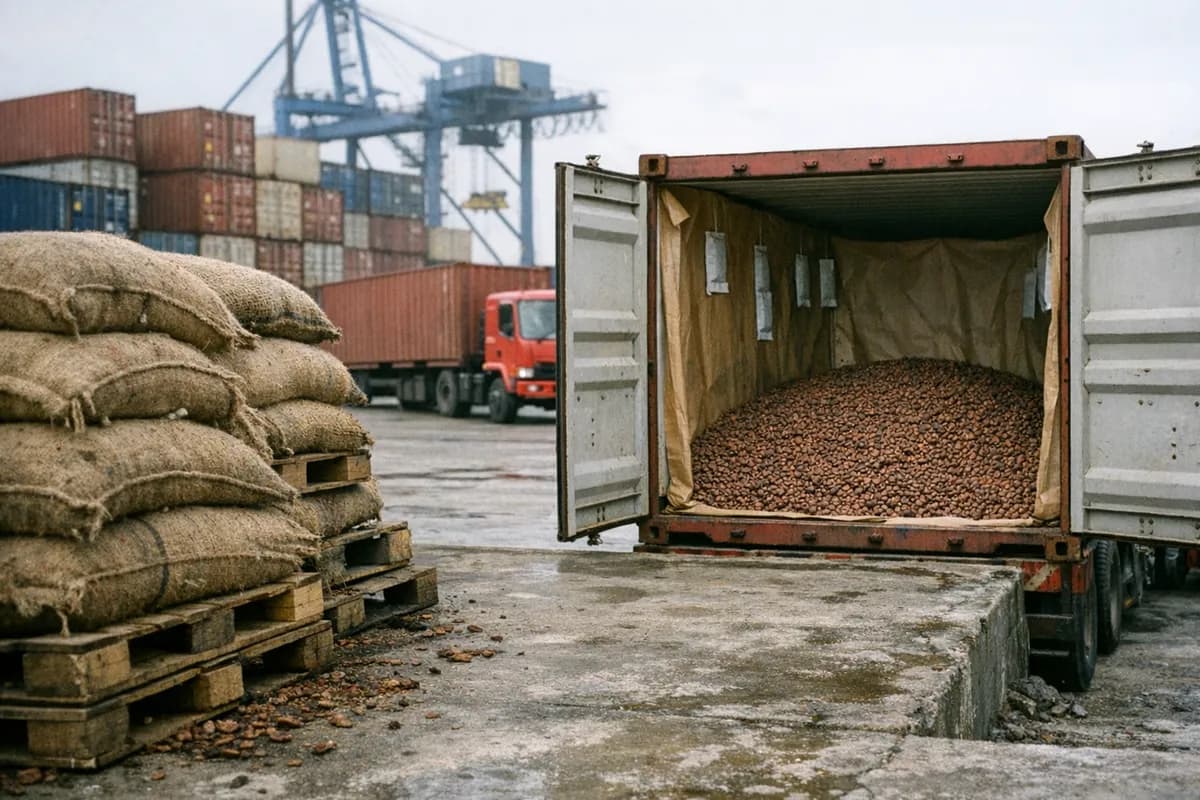
Bag marks matter more than they appear to. A packing list can look correct while the warehouse team receives bags that are difficult to connect to the approved lot. Ask the supplier to confirm bag marking practice before loading. For jute-bag shipments, receiving teams should be able to sample across bags and check that the lot condition matches the pre-shipment sample.
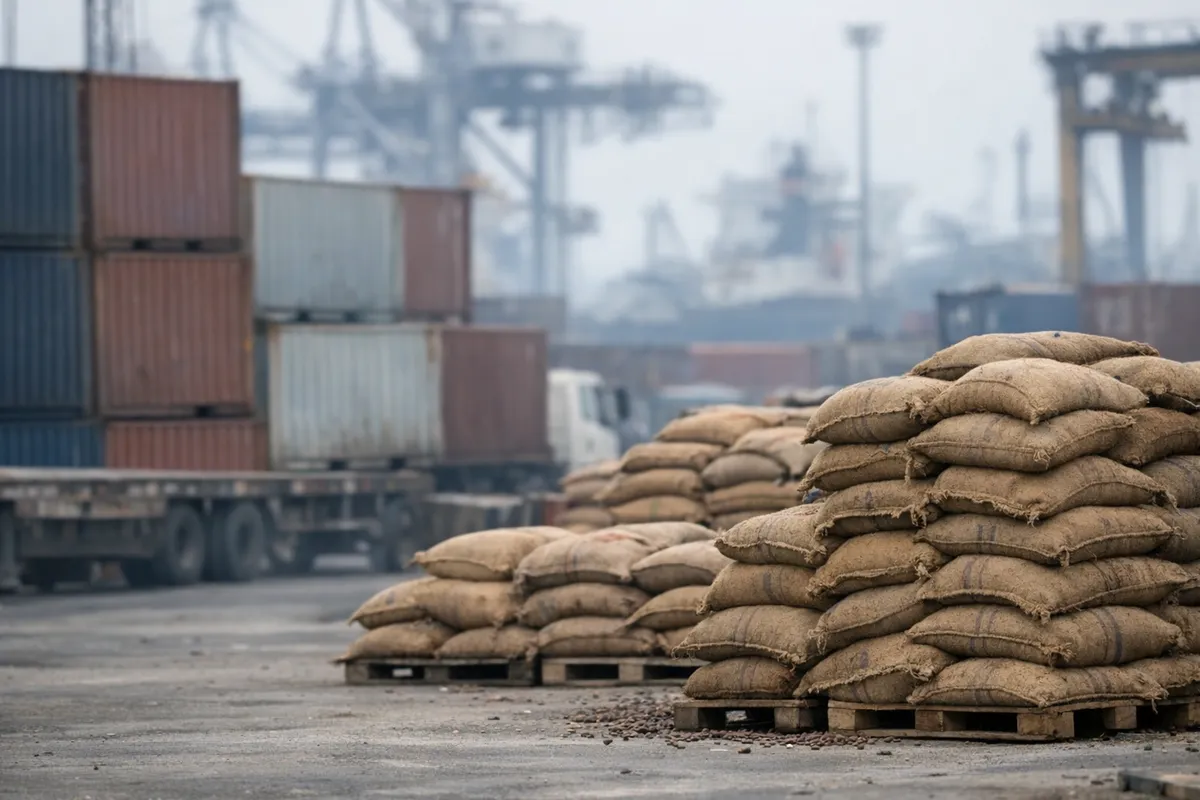
Pre-shipment review should happen before the container is released, not after the vessel has sailed. If a lot code, origin wording, or packing detail is wrong, correction is usually easier before final document issuance.
How should certification be used in an EUDR supplier review?
Certification should be treated as supporting evidence, not as a substitute for lot-level records. A certificate may help your supplier assessment, but your buyer file still needs the records that connect the shipped cocoa to its declared origin.
In our range, fermented Grade A Sulawesi, Sumatra, and Papua beans carry Rainforest Alliance, ISO 22000, and Halal (BPJPH) certifications. Our Java and Sulawesi unfermented Grade B beans carry ISO 22000 and Halal (BPJPH). Those certifications relate to the products listed in our export range, but they do not remove the buyer’s need to request the specific traceability data required for the shipment.
Use certification checks in a structured way. Confirm that the certificate named by the supplier applies to the product being offered. Confirm that the supplier name and product scope are relevant to the transaction. Then keep the certificate in the same file as the lot records, sample approval, purchase order, and shipment documents.
A practical approval flow is simple. First, define the cocoa application and target grade. Second, request traceability fields before sample approval. Third, test the sample against the agreed quality specification. Fourth, issue the purchase order with product name, lot reference, packing, Incoterm, and document requirements. Fifth, review the export documents before cargo release.
That sequence gives EU buyers a cleaner supplier file before 30 December 2026, when Regulation (EU) 2023/1115 applies to cocoa placed on the EU market. It also keeps the sourcing decision grounded in the physical cocoa being bought, not only in a certificate, a sample, or a price offer.