Cocoa Bean Fermentation Records Buyers Should Request
What wholesale buyers should collect in a fermentation record pack: box logs, cut-tests, lot codes, and how they link to the export shipment.
By Aditya WijayaHead of Export SalesSix years structuring Indonesian cocoa programmes for chocolate makers and grinders across Europe and Southeast Asia.
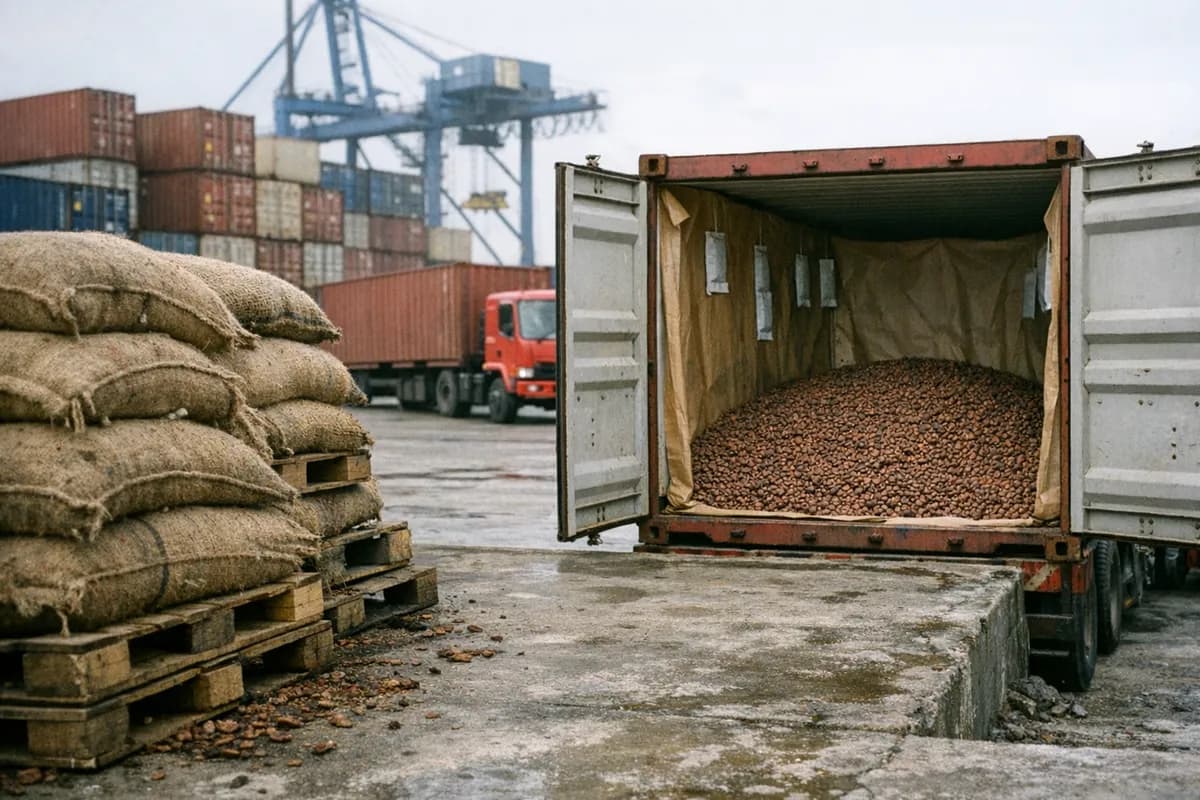
A fermentation claim on a specification sheet is not enough for couverture buyers, EUDR files, or custom fermentation programmes. You need records that show how the lot was fermented, how the cut-test was measured, and how those notes connect to the bags that will be loaded. Without that link, a sample approval and a container arrival can describe two different physical lots.
This guide lists the fermentation record pack we recommend wholesale buyers request before they approve a fermented Indonesian cocoa purchase order.
What belongs in a fermentation record pack?
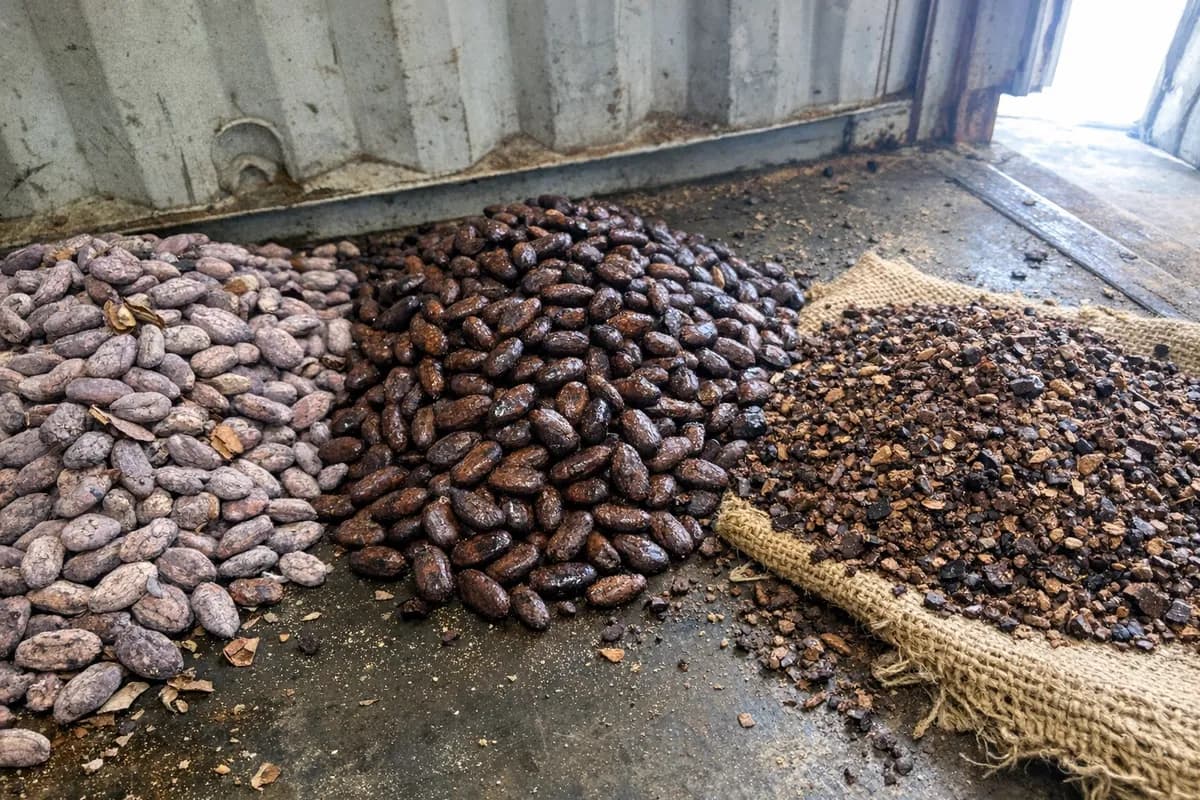
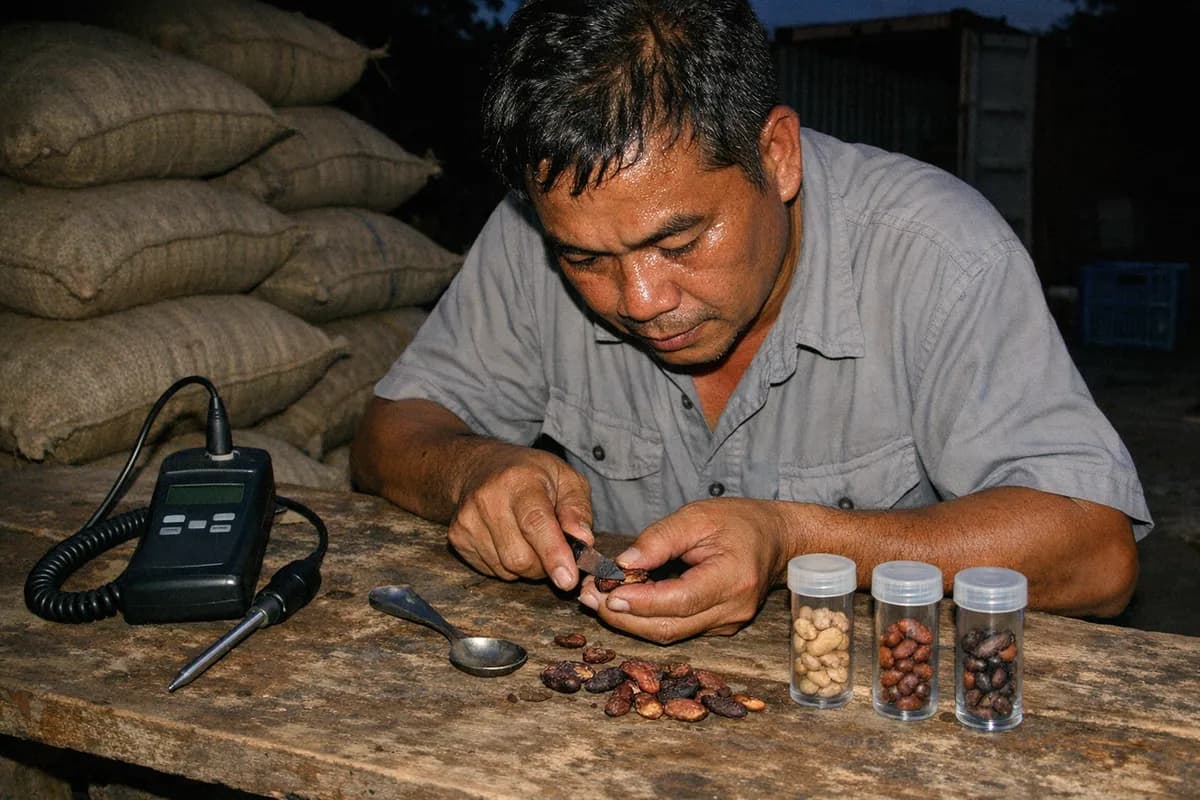
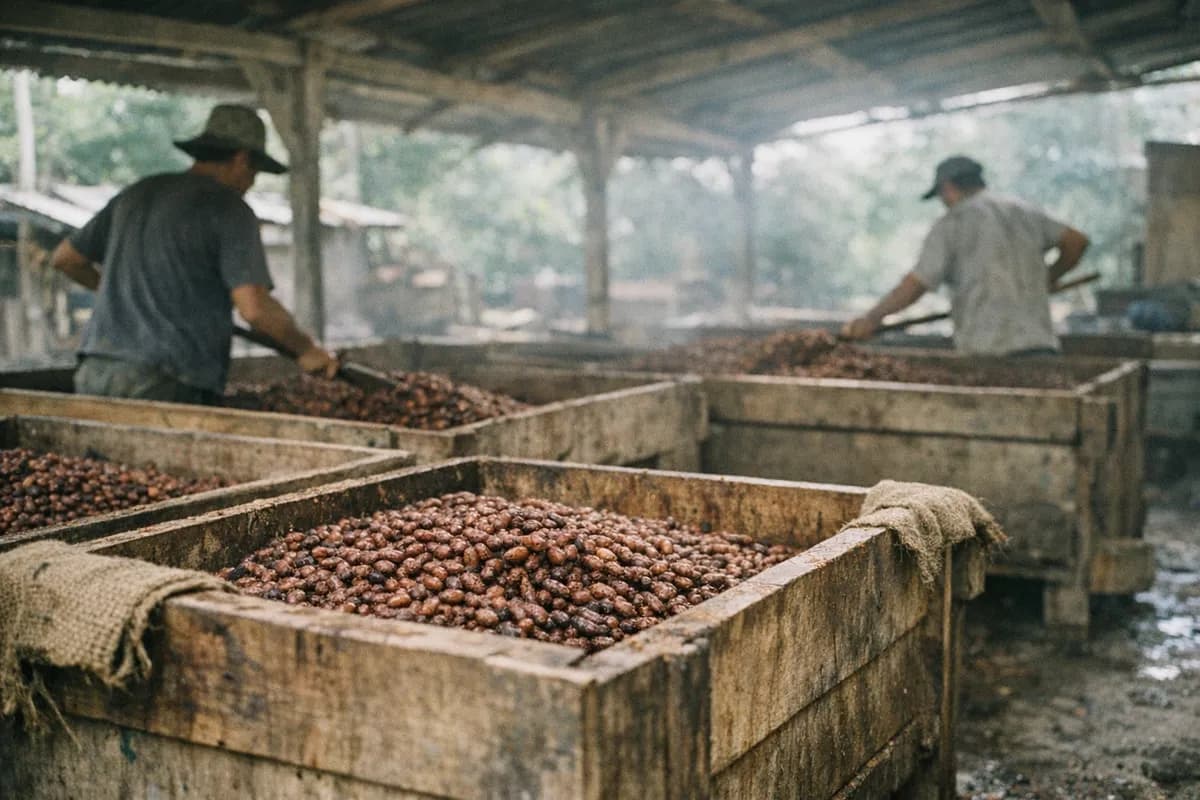
A usable pack has four parts. First, the fermentation log for the boxes or heaps that formed the export lot: harvest or intake date, start of fermentation, planned day count, turning dates, end of fermentation, and transfer to drying. Second, drying records that show moisture checks down to the export target (we hold beans at or below 7.5% moisture). Third, the cut-test sheet for the graded lot, counting fermented, purple/slaty, mouldy, and insect-damaged beans. Fourth, the warehouse lot code that will appear on bag marks and the packing list.
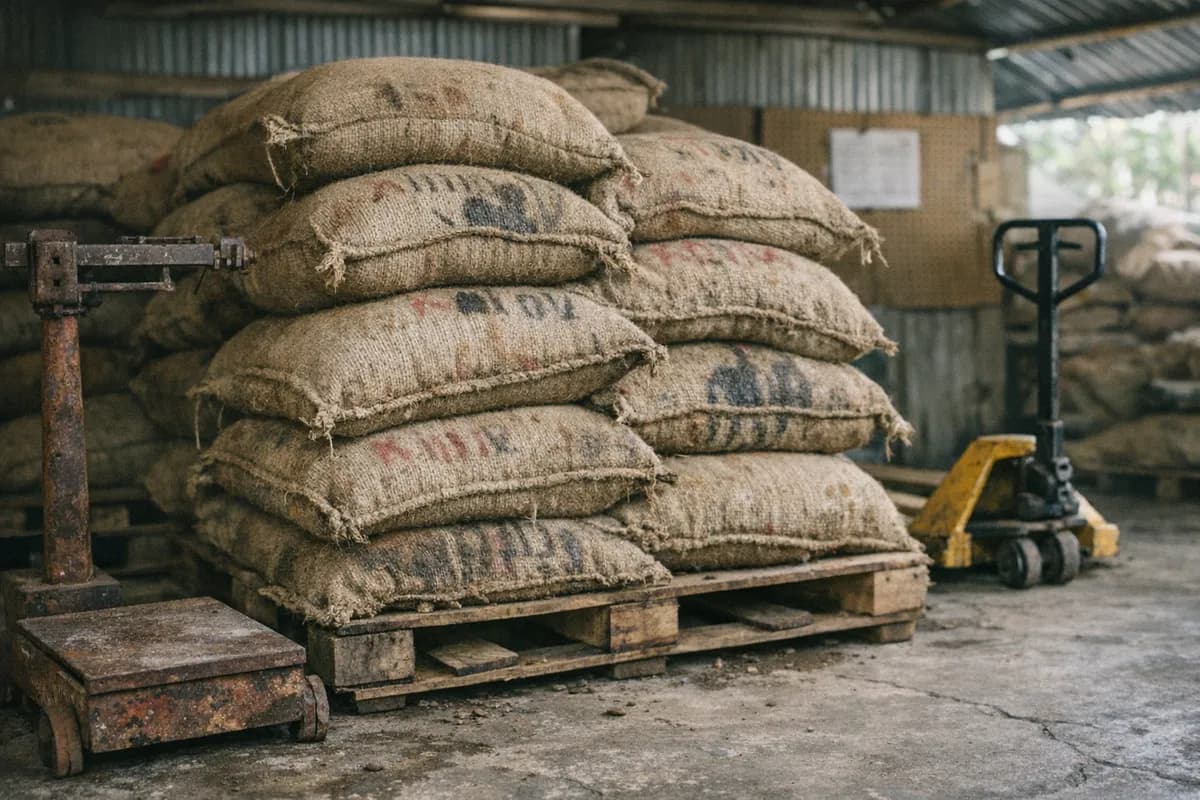
If the exporter cannot show how intake lots were combined into the export lot, treat the fermentation story as marketing. Blended lots can still be sound, but the record must say which inputs entered the blend and which cut-test applies after blending.
For catalogue fermented grades, start with fermented Indonesian cocoa beans and request the record pack on the lot you are sampling, not a generic farm brochure.
How should cut-tests be tied to the sample?
The sample you roast should carry the same lot reference as the cut-test sheet. Ask for cut-test photos and the fermented-bean percentage on that reference before you approve flavour. Our house Grade A Sulawesi fermented and Papua fermented lots are cleared at ≥85% fermentation; Sumatra fermented Grade A at ≥80%. Organic and Fairtrade Sulawesi and Sumatra lots use the same cut-test floors as their conventional counterparts on the specification sheet.
Reject the practice of approving a "representative" sample from last month's crop when the container will be stuffed from a new fermentation run. If timing forces an indicative sample, require a pre-shipment sample and cut-test from the actual export lot before the bill of lading is issued.
What extra records do custom fermentation programmes need?
Custom programmes start with a written protocol: target day count, turning schedule, target cut-test percentage, drying moisture, and the cooperative harvest window. We run these at wholesale scale only, with a minimum of one 20 ft container (about 13 MT). The record pack then adds the approved protocol, daily box notes against that protocol, and variance comments if weather forced a change in turning or drying days.
That is the difference between "we ferment 5 to 6 days" and a programme your R&D team can repeat next season. Details and enquiry routing sit on our services page under custom fermentation.
How do fermentation records support EUDR and certificates?
Fermentation records do not prove deforestation status, but they strengthen lot identity. Pair them with producer or cooperative identity, plot-location fields in the format your EU compliance team requires, and consistent lot codes on export documents. EUDR applies to cocoa from 30 December 2026 under Regulation (EU) 2023/1115; building the file now avoids a scramble on the first post-deadline shipment. See EUDR readiness for Indonesian cocoa.
Certificates (Organic, Fairtrade, Rainforest Alliance, Halal, ISO 22000) should name the same product and, where the scheme requires it, the same lot or programme as the fermentation pack. Our Organic and Fairtrade lots are the shortlist when both schemes must appear on one purchase order.
What MOQ and timing should buyers plan for?
Fermented Grade A containers remain 13 MT minimum. Conventional fermented lead time is typically 2 to 3 weeks; certified and custom-protocol lots more often need 3 to 5 weeks because fermentation cannot be shortened to hit an earlier vessel. Ask for the record pack at enquiry stage so document review does not start after stuffing.
Send your target cut-test range, destination port, and volume through our contact page. We will confirm whether a catalogue grade or a custom fermentation protocol is the right path and attach the record checklist to the sample shipment.