Indonesian Cocoa Market Outlook: Production and Exports
Indonesia harvested about 617,000 t of cocoa in 2024 (BPS/Ditjen Perkebunan) while ICCO marketable production is near 180,000 t. What wholesale buyers should track for demand planning.
By Aditya WijayaHead of Export SalesSix years structuring Indonesian cocoa programmes for chocolate makers and grinders across Europe and Southeast Asia.
Corporate cocoa buyers plan demand against origin production, the split between beans and processed cocoa, and sustainability requirements that change which lots they can book. Indonesia is no longer framed as a top-three global producer. National plantation statistics put the 2024 harvest near 617,000 tonnes, while the International Cocoa Organization (ICCO) estimates marketable production near 180,000 tonnes for the 2023/24 crop year, roughly seventh worldwide. Processed cocoa now dominates the country's export earnings compared with raw beans.
This note summarises the figures and structural trends our wholesale customers ask about when they build annual volume plans. It is not a price forecast. Spot and terminal prices move too fast to publish in a lasting guide; we name the benchmarks a quote is built from when you request one.
How large is Indonesia's cocoa production today?
Indonesia's Directorate General of Plantations reported about 617,000 tonnes of cocoa harvested in 2024. The International Cocoa Organization (ICCO), which counts cocoa entering trade channels, estimates marketable production near 180,000 tonnes for the 2023/24 crop year, which places the country around seventh among global producers. Older marketing copy that still calls Indonesia a top-three producer is out of date and should not be used in buyer briefing packs.
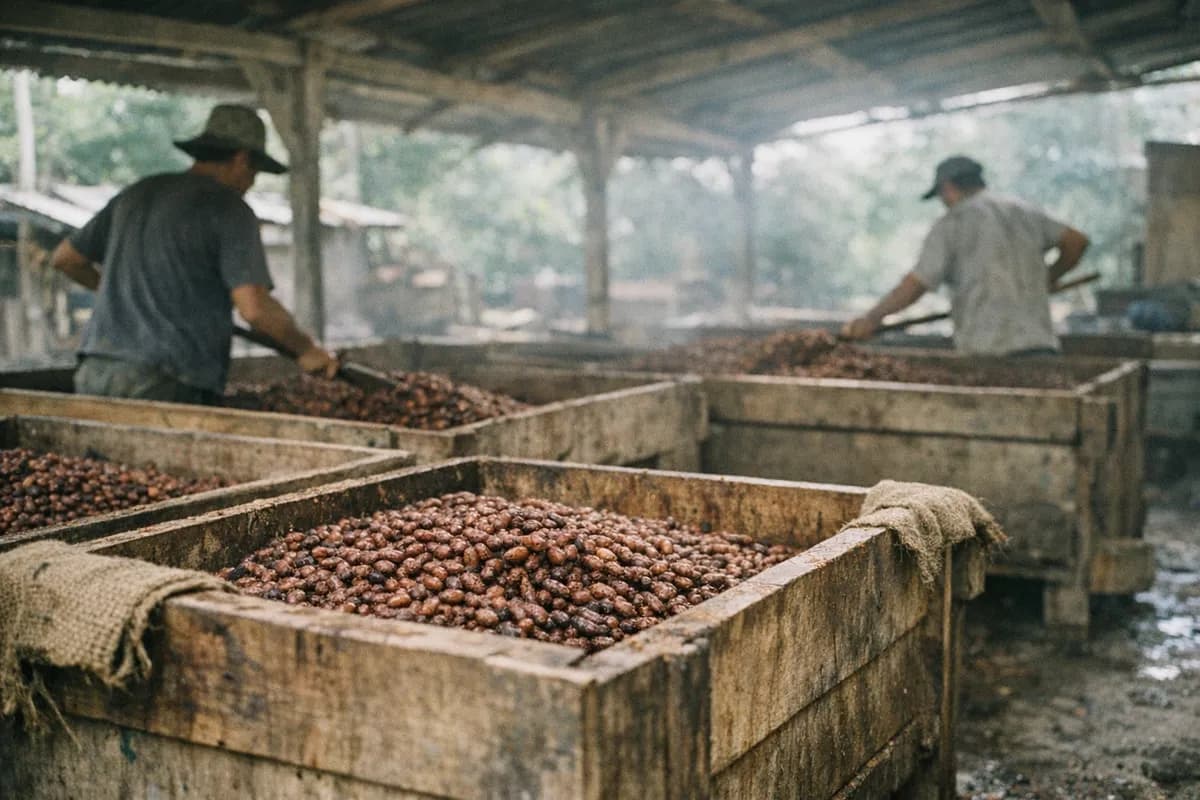
For demand planning, the useful question is not global rank but available exportable surplus by form. Domestic grinding capacity absorbs a large share of beans, which is why raw bean export tonnage is small relative to processed cocoa. If your plant needs whole beans, plan against a thinner export pool than the headline harvest figure suggests. If you can take liquor, butter, cake, or powder, the Indonesian offer is deeper.
Our current wholesale range covers fermented and unfermented beans from Sulawesi, Sumatra, Java, and Papua, plus nibs, liquor, cake, butter, and powder. See the full product catalogue when you map SKUs to your annual plan.
Why do processed cocoa exports dwarf raw bean exports?
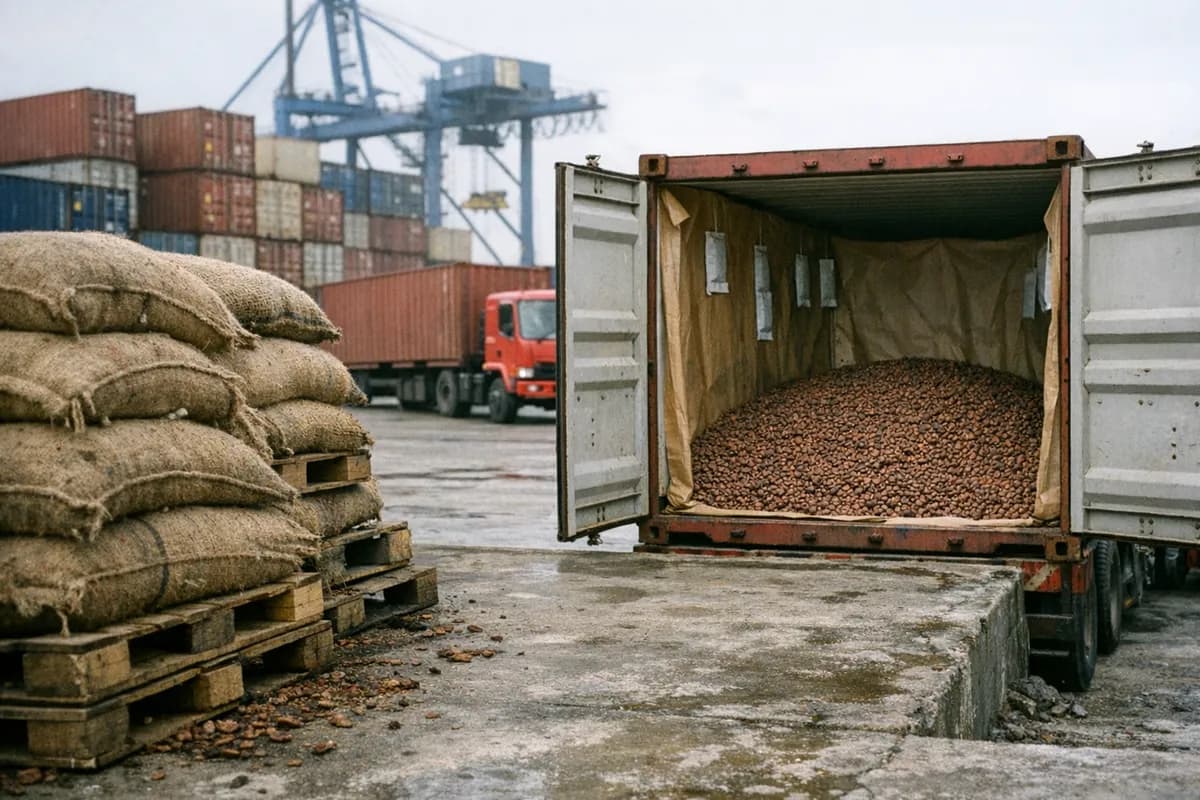
Indonesian export statistics for 2024 show the imbalance clearly: about 304,717 tonnes of processed cocoa worth roughly USD 2.4 billion, against about 13,182 tonnes of raw beans worth about USD 80 million. Grinders and brand owners that can buy intermediate products capture more of what Indonesia actually ships.
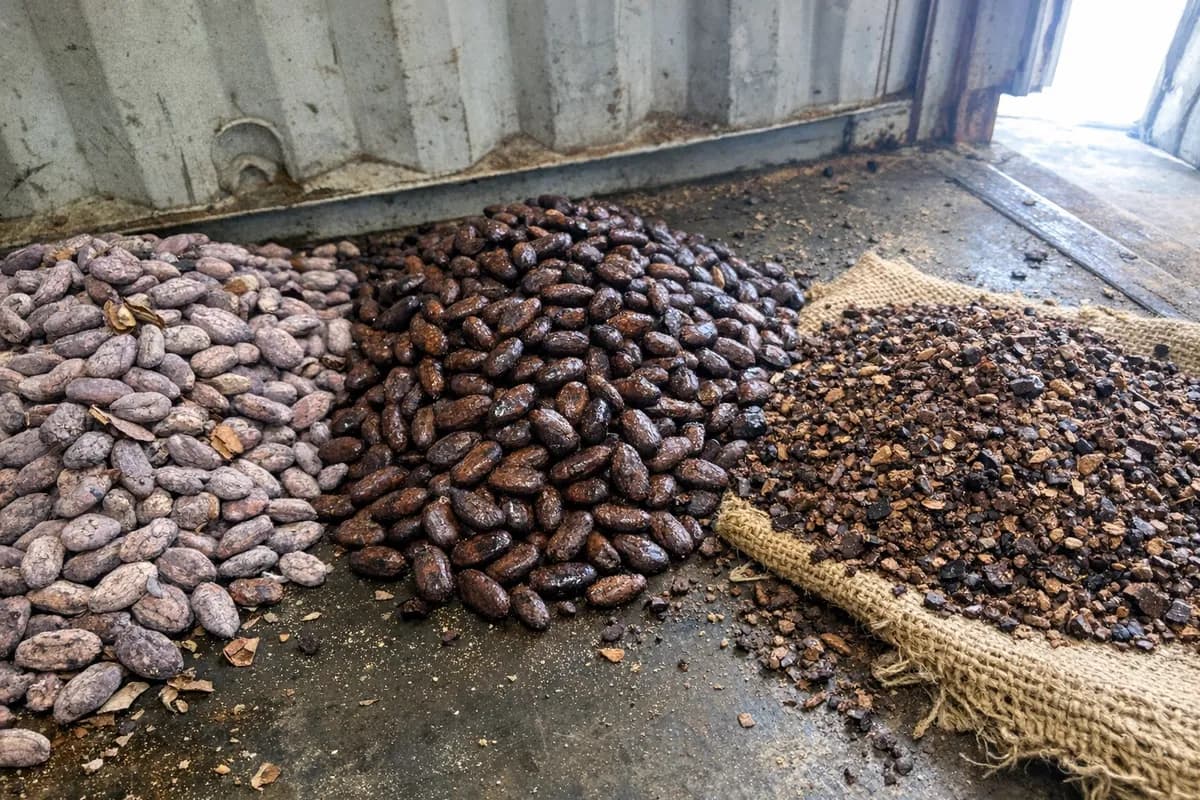
That split also explains why our catalogue is not beans-only. Cocoa ingredients (nibs, liquor, cake, butter, powder) sit beside whole-bean grades so a single origin relationship can feed a couverture line and a bakery powder line without a second supplier search. Cake at 10 to 12% fat is the intermediate for plants that mill powder in house; finished natural and alkalized powders suit plants that do not.
What should buyers track for the next harvest cycle?
Track three operational signals, not a single national average yield. First, regional harvest windows: Sulawesi main crop and mid-crop timing drives most commercial unfermented availability, while highland Sumatra and Papua fermented lots are more seasonal and should be reserved earlier. Second, certified programme allotments: Organic and Fairtrade containers are allocated by cooperative and crop year, so lead times of three to five weeks are normal versus two to three weeks on conventional fermented Grade A. Third, policy and compliance: PMK 68/2025 export duty tiers (0%, 2.5%, 5%, 7.5%) and EUDR readiness for EU destinations change landed cost and which lots your compliance team will accept.
Sustainability pressure continues to favour lots with Rainforest Alliance, Organic, Fairtrade, or clear farm-to-lot records even when a certificate is not printed on the wrapper. Our Organic and Fairtrade collection is the shortlist for dual-certified fermented containers.
How should wholesale MOQs shape a demand plan?
Plan fermented Grade A beans, including Organic and Fairtrade lots, in full-container increments of about 13 MT. Unfermented pressing grades and natural cocoa cake accept wholesale partial loads from 5 MT for qualified first-time buyers, subject to consolidation. Processed ingredients start at 1 MT for nibs and 3 to 5 MT for powder, liquor, butter, and cake.
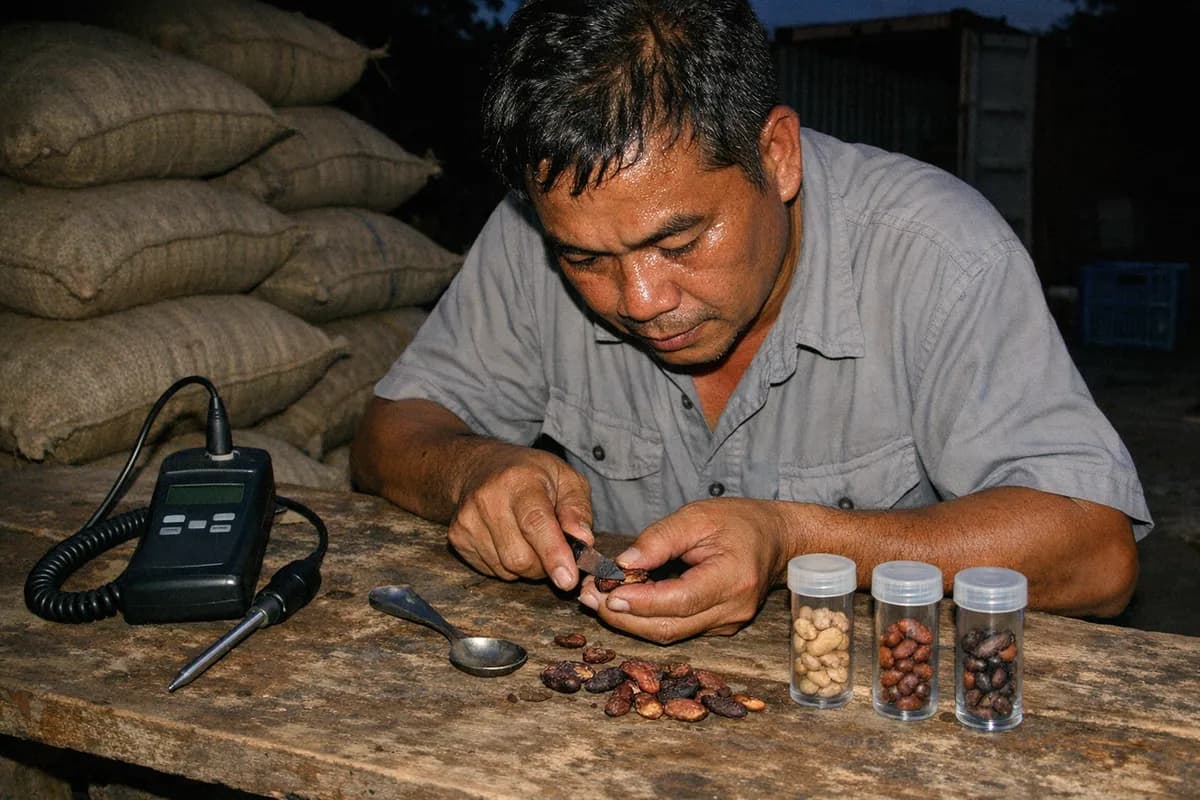
If you need a fermentation profile outside the catalogue cut-test bands, use a custom fermentation programme booked against a named cooperative harvest at the same 13 MT floor. That is a wholesale protocol service, not a micro-lot programme.
Send your annual volume by product form, destination ports, and certificate requirements through our contact page. We will map them to current allotments, lead times, and an indicative Incoterm structure without quoting a spot price that would be stale before your board pack is finished.