Indonesian Cocoa Export Ports and Transit Times
Port matrix for Indonesian cocoa: Makassar, Surabaya, and Belawan loading options with typical transit ranges to Asia, Europe, and MENA.
By Aditya WijayaHead of Export SalesSix years structuring Indonesian cocoa programmes for chocolate makers and grinders across Europe and Southeast Asia.
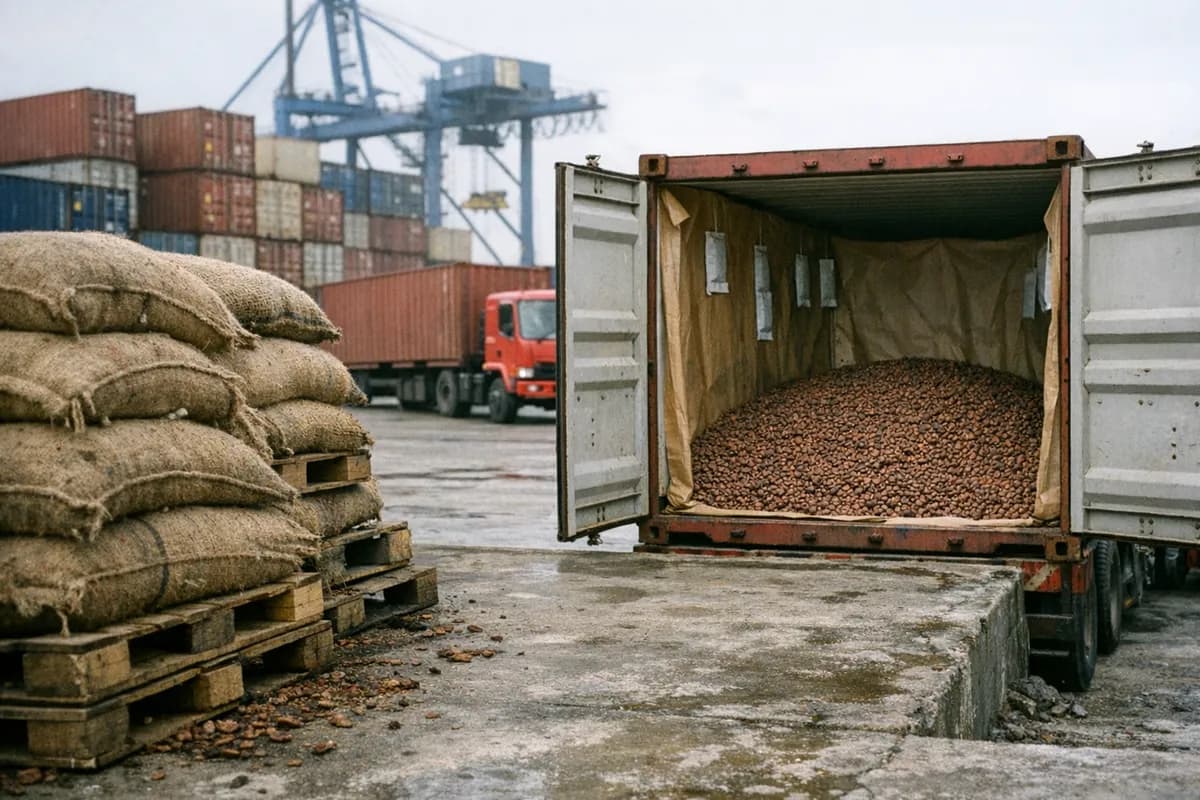
Choosing the loading port for Indonesian cocoa is a landed-cost and schedule decision, not only a freight line item. Sulawesi lots naturally clear through Makassar, Java lots through Surabaya, and Sumatran lots often through Belawan when the vessel string fits. Transit time to your discharge port then sits on top of our production lead time (typically 2 to 5 weeks depending on grade and certification).
This matrix is a planning aid. Exact schedules change with carrier rotations, congestion, and peak season. Ask for a schedule-based estimate when you send destination port and Incoterm on the quote request.
Which Indonesian ports load our cocoa?
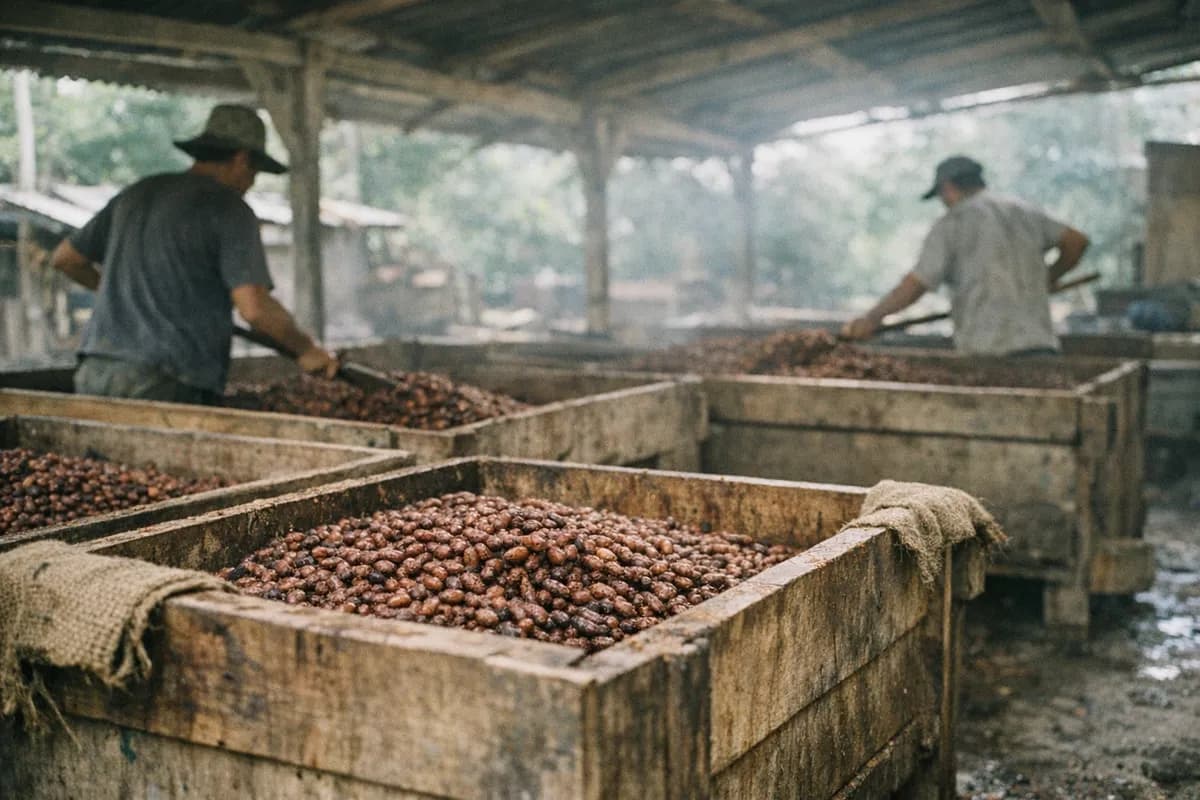
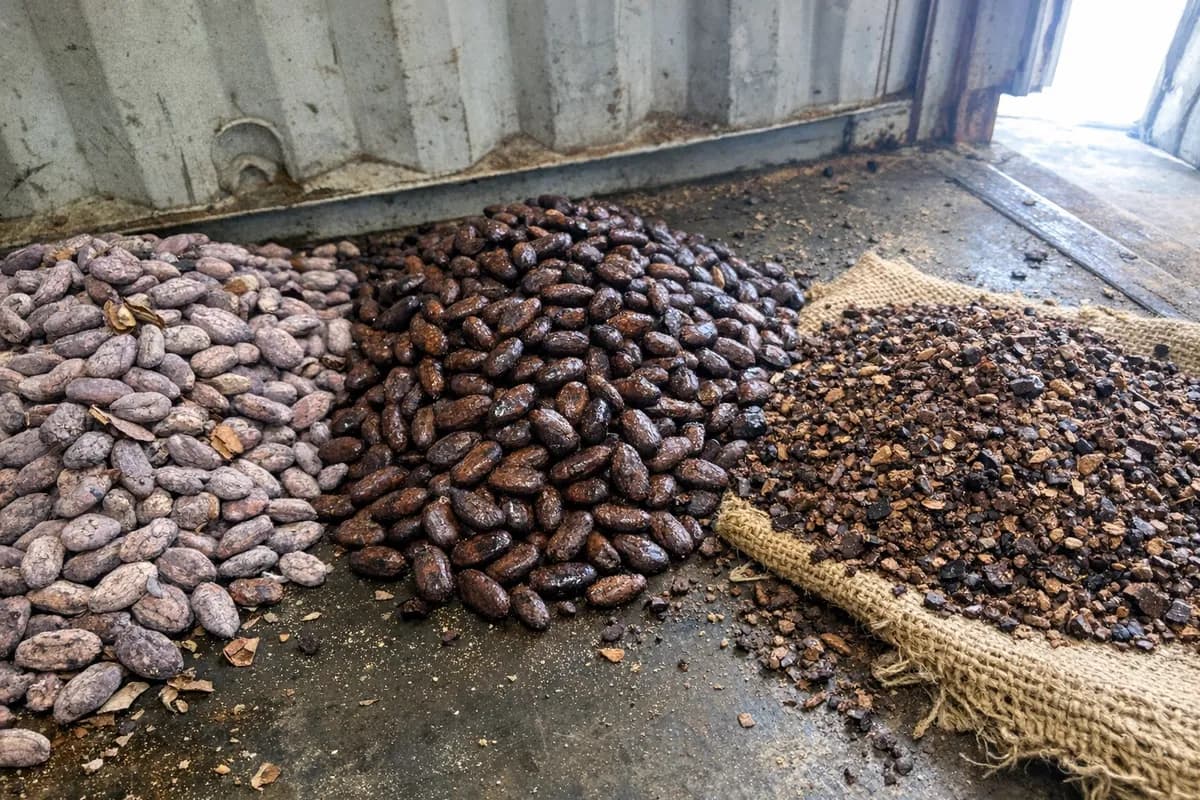
Makassar is our default for Sulawesi fermented and unfermented beans, Papua fermented lots consolidated through Sulawesi, and most Makassar-packed ingredients. Surabaya is the natural load port for Java unfermented Grade B. Belawan (Medan) is used for highland Sumatra fermented lots when the carrier string and cut-off beat a Makassar consolidation.
Processed ingredients (nibs, liquor, cake, butter, powder) usually follow the Java processing facility and ship from Surabaya, unless a contract specifies Makassar stuffing. Confirm the load port on the proforma so your forwarder books the correct string.
Browse whole beans by origin when you are still choosing which island feeds which plant.
What transit times should planners assume?
Use these planning bands for dry-container cocoa on common strings, then replace them with the carrier schedule at booking:
- Singapore / Port Klang / Laem Chabang: often 5 to 10 days from Makassar or Surabaya.
- Busan / Shanghai / Tokyo-Yokohama ranges: often 8 to 14 days depending on relay.
- Jebel Ali / Jeddah / Istanbul: often 14 to 22 days via common Middle East and East Med relays.
- Rotterdam / Hamburg / Antwerp: often 18 to 28 days depending on whether the string is direct or relays in Singapore or Colombo.
- US West Coast: often 22 to 32 days via transpacific relays; East Coast longer when via Suez or Panama.
These are not guarantees. Congestion, blank sailings, and peak cocoa or palm seasons stretch the upper end. Build receiving calendars with a buffer equal to at least one sailing week beyond the mid-point of the band.
How do Incoterms interact with the port matrix?
On FOB, you (or your forwarder) control the ocean booking after we load at the named Indonesian port, which is why FOB Makassar or FOB Surabaya is the cleanest structure for buyers with contracted freight. On CFR or CIF, we arrange carriage to your named discharge port; your landed-cost file must still separate bean value from freight (and insurance on CIF).
Sulawesi and Papua fermented Grade A lots are available FOB, CFR, or CIF. Sumatra fermented Grade A is FOB or CIF. Java and Sulawesi unfermented Grade B, cake, and most ingredients are FOB, CFR, or CIF. Put the load port, discharge port, and Incoterm in the first enquiry so we do not quote against the wrong string.
For container preparation detail, read dry container prep for Indonesian cocoa beans. For origin-side duty that sits before freight, see the export duty buyer guide covering PMK 68/2025 tiers.
What MOQ and booking lead time sit in front of sailing?
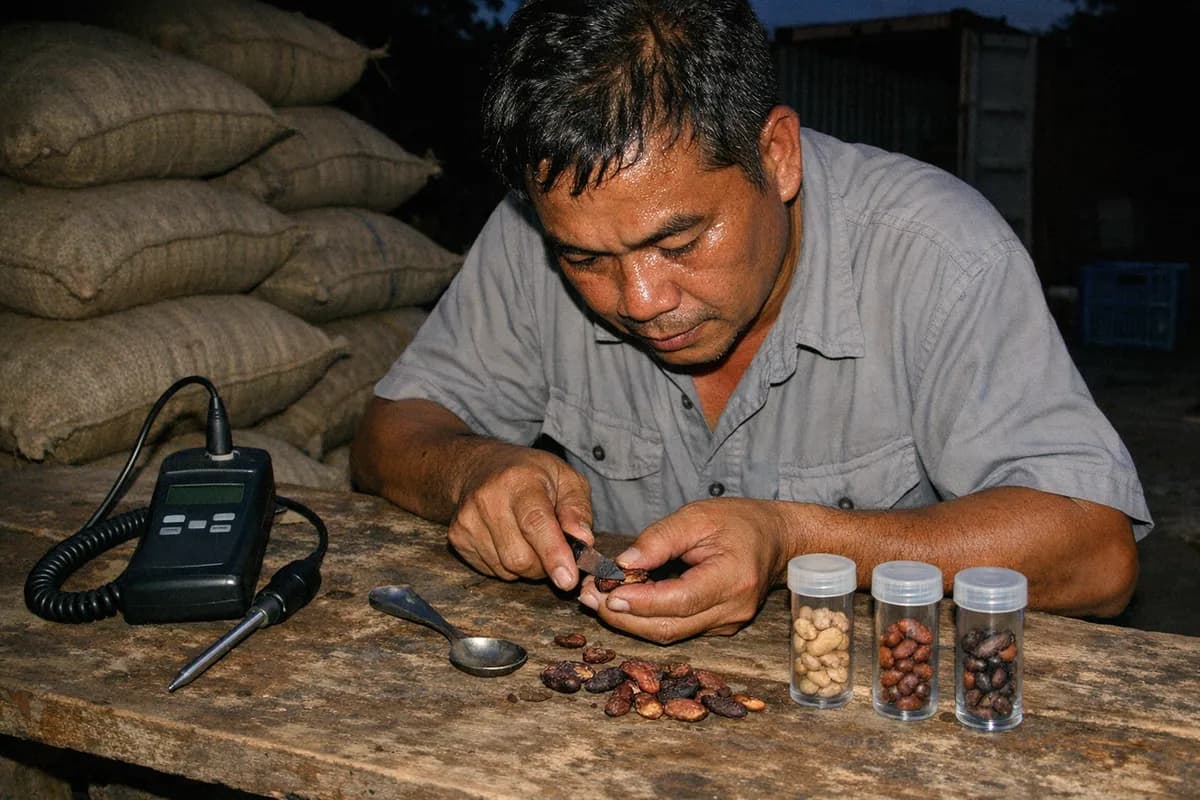
Fermented Grade A beans, including Organic and Fairtrade lots, book as 13 MT (1 × 20 ft FCL) with 2 to 5 weeks production lead time before the vessel cut-off. Unfermented pressing grades and cocoa cake can move from 5 MT on consolidation schedules. Ingredients start at 1 MT (nibs) or 3 to 5 MT (powder, liquor, butter, cake).
Add ocean transit from the matrix above to estimate door-to-plant time. EU buyers should also leave time for EUDR document checks before 30 December 2026 under Regulation (EU) 2023/1115; see our EUDR readiness guide.
Send destination port, monthly volume, and preferred Incoterm via our contact page for a schedule-based estimate on the next open allotment.