Indonesian Cocoa Beans: Dry Container Prep
Learn how to prepare a dry container for a cocoa bean shipment with ventilation, kraft lining, desiccants, and buyer-side loading checks.
By Aditya WijayaHead of Export SalesSix years structuring Indonesian cocoa programmes for chocolate makers and grinders across Europe and Southeast Asia.
A dry container can protect cocoa beans only if the beans, bags, container, and loading method are controlled before the doors close. For Indonesian cocoa beans, the main risk is not one single failure. It is a chain of small misses: beans shipped above the agreed moisture, a container with odor, kraft paper covering the vents, desiccants placed where they touch the cargo, or bags loaded against a damp wall.
We prepare cocoa bean shipments with those points in mind because the buyer receives the result weeks later. Container preparation should be written into the order, checked at loading, and supported by photos or records where needed. It should not depend on a general instruction such as “ship in good condition.”
What should be specified before booking a cocoa bean container?
Specify the cocoa grade, packing format, moisture limit, shipment term, container type, and any container preparation requirement before the booking is made. If the buyer leaves these items until loading day, the warehouse and forwarder may not have the right materials or instructions.
For a full-container fermented bean shipment, our Sulawesi Fermented Cocoa Beans, Grade A are specified at ≤ 100 beans / 100 g (SNI size class A), ≤ 7.5% moisture, ≥ 85% fermentation, ≥ 52% fat content, ≤ 3% mouldy beans, ≤ 3% slaty beans, and ≤ 1% insect-damaged beans. The minimum order is 13 MT, equal to 1 × 20 ft FCL, packed in 60 kg jute bags, with a 2 to 3 week lead time, Rainforest Alliance, ISO 22000, and Halal (BPJPH) certifications, FOB, CIF, or CFR terms, and HS code 1801.00.
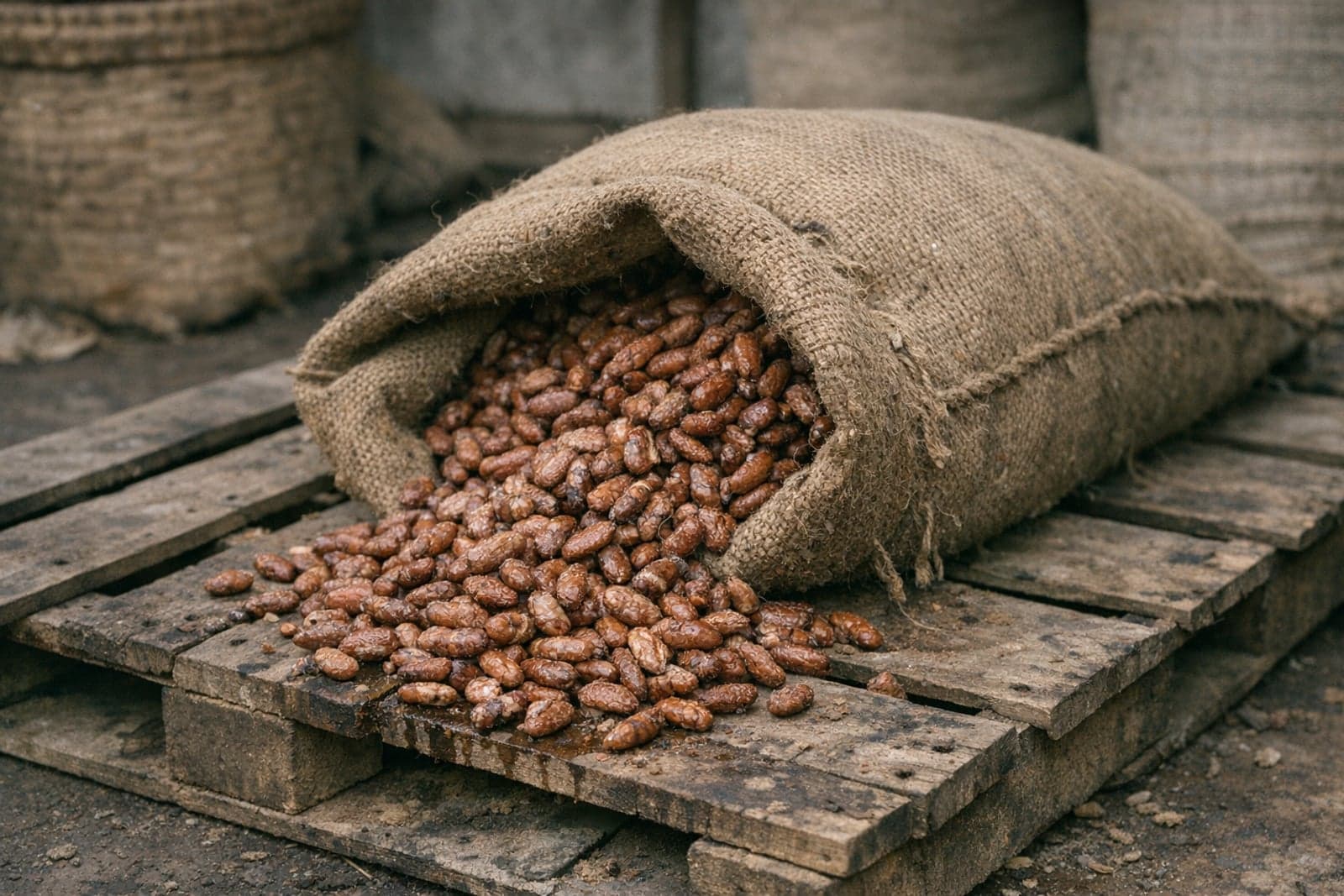
Featured product
Couverture Grade A, Sulawesi Fermented
Bean-to-bar and couverture fermented Sulawesi beans, cut-tested to ≥85% fermentation (house Grade A, SNI size class A).
Rainforest Alliance · ISO 22000 · Halal (BPJPH)
View specifications
Container preparation starts with that moisture specification. Kraft lining and desiccants help manage transit conditions, but they cannot correct beans that were not dried to the agreed limit. The purchase order should therefore state the product specification and the logistics instruction together, not as separate conversations.
For Indonesian cocoa bean sourcing across origins and grades, buyers can compare our cocoa bean range before confirming the shipment plan. If your quality team requires a specific container preparation note on the proforma invoice or packing instruction, send it with the enquiry through our contact page so we can align the quotation and loading plan.
How should the dry container be inspected before loading?
Inspect the dry container before any bags enter it, and reject it if it is wet, odorous, leaking, dirty, or structurally unsafe for bagged food cargo. The inspection should cover the roof, side panels, floor, doors, vents, and previous-cargo condition.
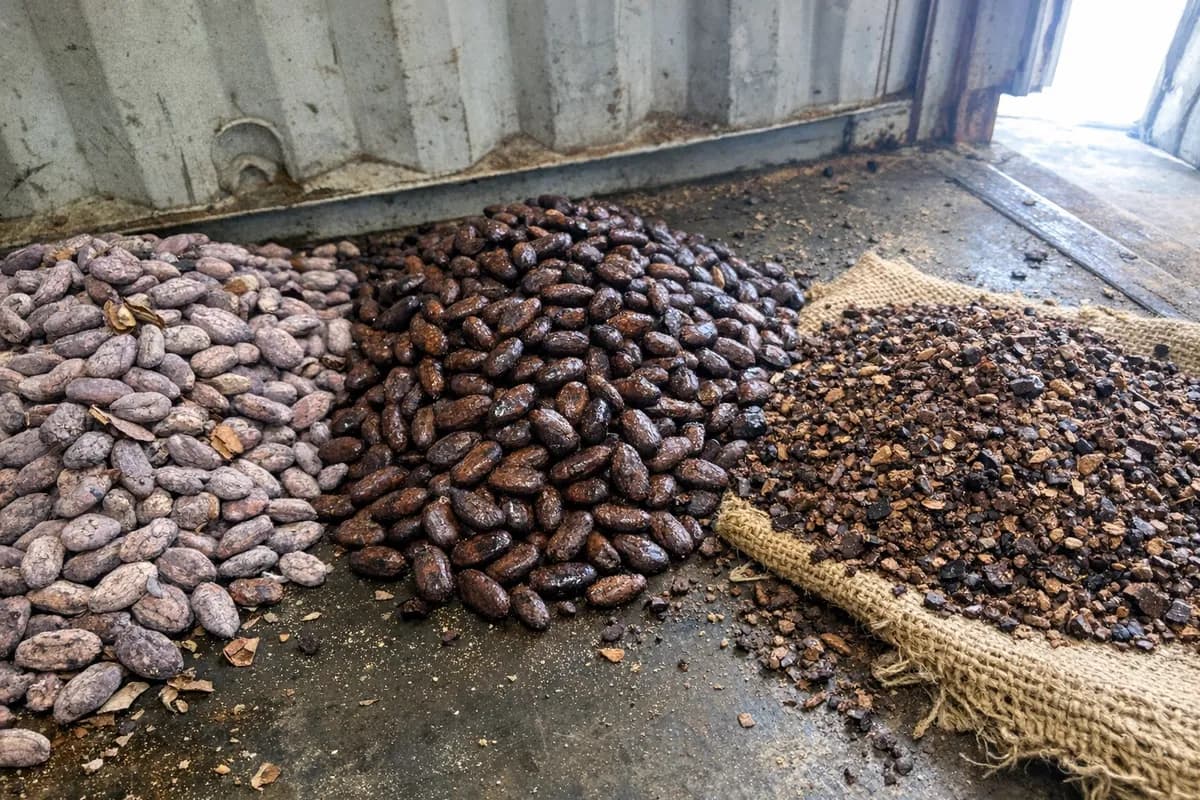
We treat odor as a hard check. Cocoa beans can absorb smells from paint, chemicals, fuel, fishmeal, rubber, or other strong previous cargo. A container may look clean but still be unsuitable if the smell is present after the doors are opened and aired. If the odor cannot be removed before loading, the container should not be used for cocoa beans.
The floor should be dry, intact, and free from nails, splinters, loose wood, oil marks, and powder residue. Cocoa in jute bags is handled by people, forklifts, and warehouse equipment, so torn bags can become a cargo loss and a contamination issue. A damaged floor also makes it harder to keep the kraft lining in place.
The roof and walls should be checked for holes, heavy dents, rust flakes, and moisture marks. A simple field check is to close the doors from inside or inspect with the doors nearly closed and look for daylight through the roof or side panels. Door gaskets should compress properly when the doors close. If a gasket is broken or twisted, rainwater can enter during handling or terminal storage.
Vents should be present and clear. The inspection should confirm that lining paper, tape, cargo, or old debris will not block the vent openings from inside. Ventilation does not remove all condensation risk, but blocked vents make the container less suitable for bagged agricultural cargo.
How should ventilation, kraft lining, and desiccants be arranged?
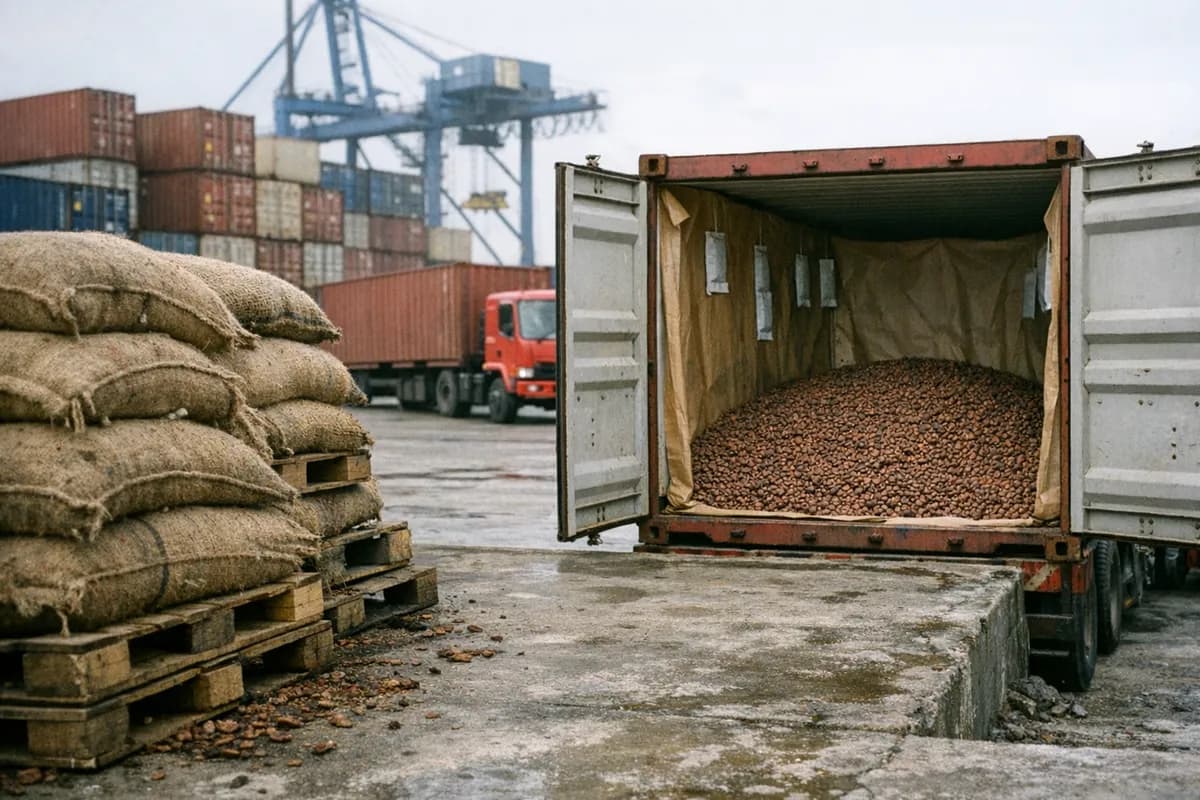
Use ventilation, kraft lining, and desiccants as a combined moisture-control system, not as substitutes for proper drying and clean loading. Vents should remain open and unobstructed, kraft paper should separate the bags from container surfaces, and desiccants should be fixed where they can absorb moisture without touching or damaging the bags.
Kraft lining is normally used on the floor and along the lower side walls where bags may touch steel or timber surfaces. The purpose is practical: it creates a clean barrier, reduces direct contact with cold or damp surfaces, and helps catch minor surface moisture before it reaches the bag stack. The lining should be laid flat and secured so it does not bunch under pallets, forklifts, or bag movement.
Do not cover the vents with kraft paper. This is an easy loading mistake. A neatly lined container can still be poorly prepared if the side lining blocks airflow. When we review a lining setup, we want to see that the paper protects the cargo contact points while leaving the ventilation path clear.
Desiccants should be cargo-compatible and fixed according to the supplier’s instructions and the shipping line’s acceptance rules. They should not be loose on the floor. They should not sit directly on top of cocoa bags where leakage, tearing, or saturation could wet the jute. If desiccants are hung from lashing points or placed along side walls, they must not interfere with door closure, vent openings, or safe unloading.
Avoid wrapping the whole cargo in plastic unless the buyer has specifically required it and the moisture plan has been reviewed. A full plastic enclosure can trap moisture inside the cargo block. For cocoa beans in jute bags, the better control is usually clean dry beans, a clean dry container, breathable packing, protected contact surfaces, and correctly placed desiccants.
Buyers who want to compare bean specifications before deciding the loading format can review our article on Indonesian cocoa bean grades and quality specs. The grade decision and the container decision should support the same receiving standard.
What loading checks protect bagged cocoa beans in transit?
Loading checks should confirm that the bags are dry, intact, correctly marked, and stacked so they do not press against wet surfaces or block the container vents. The final seal should be applied only after the cargo, lining, desiccants, and door area have been checked.
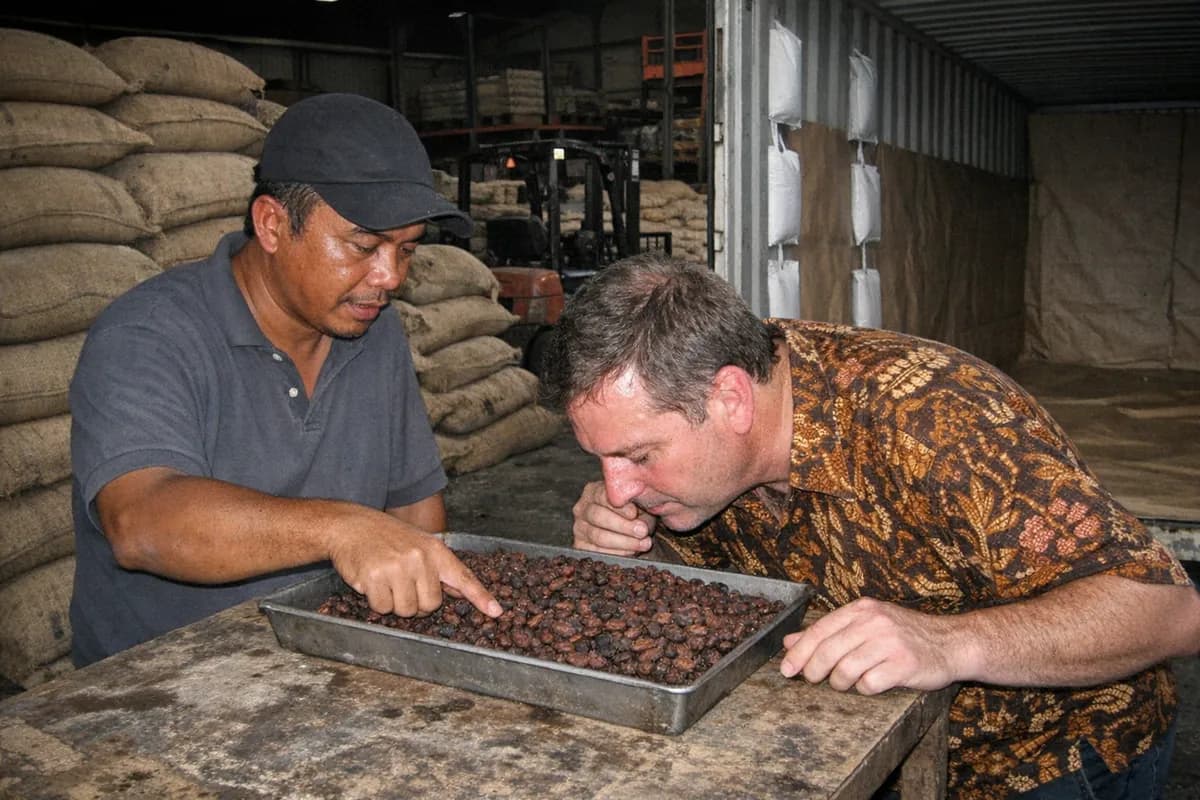
For 60 kg jute bags, the loading team should look for torn seams, wet patches, abnormal odor, heavy dust, and mismatched bag marks before the bag enters the container. A wet or stained bag should be set aside for inspection, not hidden inside the stack. If a buyer asks for loading photos, useful images include the empty container, floor lining, side lining, desiccant placement, first rows of bags, final loaded view, closed doors, and seal number.
Stacking should keep the door area controlled. Bags should not bulge into the doors in a way that makes closing difficult or tears the last row when the doors are opened at destination. If the container is hand-loaded, the stack should be stable enough for terminal handling and sea movement. If pallets are used, the buyer and seller should agree that format before quotation because it changes loading density and receiving work.
The loading record should match the documents. Bag count, net weight, lot code, container number, seal number, product name, and packing format should align with the commercial invoice, packing list, bill of lading instructions, certificate of origin, and any phytosanitary document required for the shipment. Document matching will not prevent condensation, but it reduces receiving disputes caused by unclear lot identity.
For origin comparison before booking, buyers can review Sulawesi cocoa beans, Sumatra cocoa beans, and other Indonesian origins in our product pages. The origin decision should be made before container planning, because lead time, availability, and grade selection affect the shipping schedule.
What is the MOQ and price context for Indonesian cocoa beans?
Our fermented Grade A Sulawesi, Sumatra, and Papua cocoa beans have a 13 MT minimum order for 1 × 20 ft FCL, while our unfermented Grade B Java and Sulawesi cocoa beans have a 5 MT minimum order. We do not state a standing market price because the quotation depends on grade, packing, Incoterm, volume, certification requirement, shipment timing, and season.
Container preparation can affect the cost basis even when the bean grade stays the same. A buyer requesting extra lining materials, specific desiccant placement, loading photos, palletization, or a named inspection procedure should include those requirements before the quote is issued. That way, the offer reflects the actual work rather than a basic shipment assumption.
Incoterm selection also changes what the buyer is comparing. Under FOB, the buyer’s freight arrangement and destination-side requirements may influence the shipping line instruction. Under CFR or CIF, the freight element is included in the seller’s offer, but the buyer should still state any container preparation requirements early so the forwarder can act on them.
For a current quotation, send us the destination port, requested origin or grade, volume, preferred Incoterm, packing requirement, and container preparation instruction through our contact page. If your receiving team has a standard wording for kraft lining, vents, or desiccants, include it with the enquiry.
How should buyers write container preparation into the purchase order?
Write the container preparation requirement as a clear operational instruction, not as a general preference. The purchase order should say that the cocoa beans are to be loaded in a clean, dry, odor-free dry container, with vents unobstructed, kraft lining installed at floor and side contact points, and desiccants fixed away from direct contact with the bags.
The PO should also identify the product, grade, packing, shipment term, required documents, and any photo evidence expected at loading. If the buyer wants the right to reject a container before loading, that expectation should be agreed before the shipment date. The same applies to third-party inspection, special bag marks, or destination warehouse rules.
A good container instruction is short enough for the warehouse to follow and specific enough for the buyer to audit. It connects the commercial order to the physical cargo condition. For cocoa beans, that connection matters: the buyer is not only purchasing a grade on paper, but a bagged agricultural cargo that must arrive dry, clean, and traceable enough for receiving control.