Indonesian Cocoa Bean Grades and Quality Specs
If you ask what are cocoa bean grades and quality specs, this Indonesian guide shows grading steps and buyer checks before quotation.
By Aditya WijayaHead of Export SalesSix years structuring Indonesian cocoa programmes for chocolate makers and grinders across Europe and Southeast Asia.
Cocoa bean grades are not just labels on a sales sheet. For a buyer, the grade should connect to checks that can be repeated: bean count, moisture, fermentation appearance, defect level, packing condition, and the way the lot performs after roasting.
At Indonesia Cacao, we treat grading as a buying control. A grade should help your factory compare offers, approve a sample, receive a shipment, and decide whether the beans fit chocolate production, grinding, butter pressing, or another industrial use.
What are the different grades of Indonesian cocoa beans?
Indonesian cocoa bean grades separate lots by measurable quality factors such as bean count, moisture, fermentation level, and intended use. In our export range, house Grade A refers to fermented beans with tighter SNI size classes and quality grade I defect limits, while house Grade B is positioned for buyers who can work with wider size classes (such as SNI class C) or unfermented material.
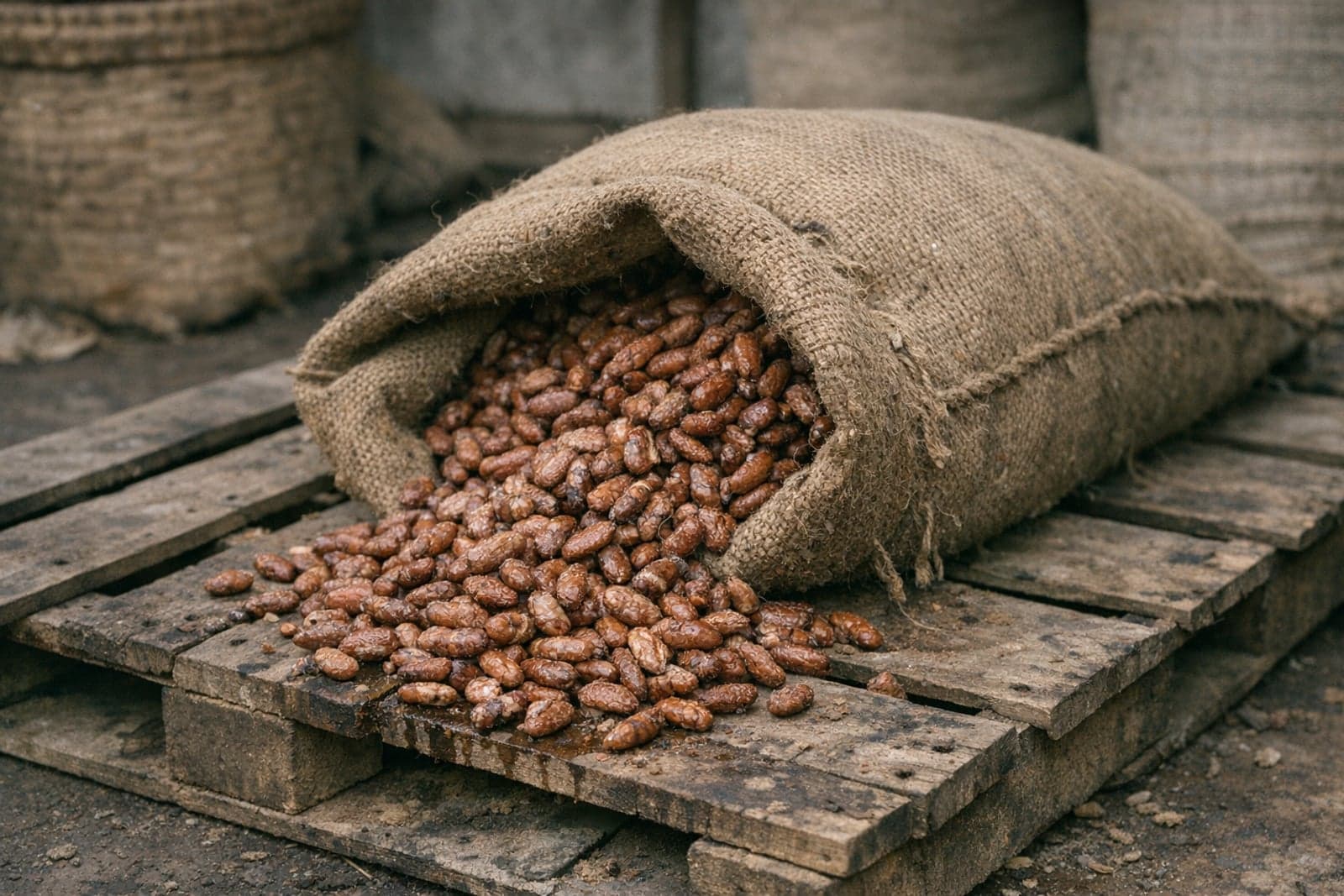
For the export items we currently offer, Sulawesi Fermented Cocoa Beans, Grade A are specified at ≤ 100 beans / 100 g (SNI size class A), ≤ 7.5% moisture, and ≥ 85% fermentation, with a 13 MT minimum order equal to 1 × 20 ft FCL, packed in 60 kg jute bags, with a 2–3 week lead time, Rainforest Alliance and ISO 22000 certifications, FOB, CIF, or CFR terms, and HS code 1801.00.
Featured product
Couverture Grade A, Sulawesi Fermented
Bean-to-bar and couverture fermented Sulawesi beans, cut-tested to ≥85% fermentation (house Grade A, SNI size class A).
Rainforest Alliance · ISO 22000 · Halal (BPJPH)
View specificationsSumatra Fermented Cocoa Beans, Grade A are specified at ≤ 105 beans / 100 g (SNI size class B), ≤ 7.5% moisture, and ≥ 80% fermentation, with a 13 MT minimum order equal to 1 × 20 ft FCL, packed in 60 kg jute bags, with a 3–4 week lead time, Rainforest Alliance and ISO 22000 certifications, FOB or CIF terms, and HS code 1801.00.
Java Unfermented Cocoa Beans, Grade B are specified at ≤ 120 beans / 100 g (SNI size class C) and ≤ 7.5% moisture, with a 5 MT minimum order, packed in 60 kg jute bags or bulk, with a 1–2 week lead time, FOB, CFR, or CIF terms, and HS code 1801.00.
That is the commercial view. The technical view is simpler: a grade should tell your receiving team what to test and what to reject. If the purchase order says Grade A but does not state moisture, bean count, fermentation target, packing, and shipment term, the grade name is not enough for a factory buying decision. Buyers comparing current options can start with our Grade A cocoa beans and Grade B cocoa beans pages before requesting samples.
How are Indonesian cocoa beans graded before export?
Cocoa beans are graded by taking a representative sample from the lot, checking the agreed physical and process indicators, then matching the result against the contract specification. The main export checks are bean count, moisture, cut-test appearance, visible defects, odor, and packing condition.
Bean count is a size-uniformity check. The usual buyer concern is roast control: a lot with many small beans can behave differently from a lot with larger, more uniform beans. When bean count is stated as beans per 100 g, the test gives the buyer a quick way to compare lot density and size distribution without relying on appearance alone.
Moisture is checked because it affects storage risk and shipping condition. Beans that are too wet can create problems in the bag, in the container, or in the buyer’s warehouse. A buyer should verify moisture on the pre-shipment sample and again on arrival if the beans will be stored before processing.
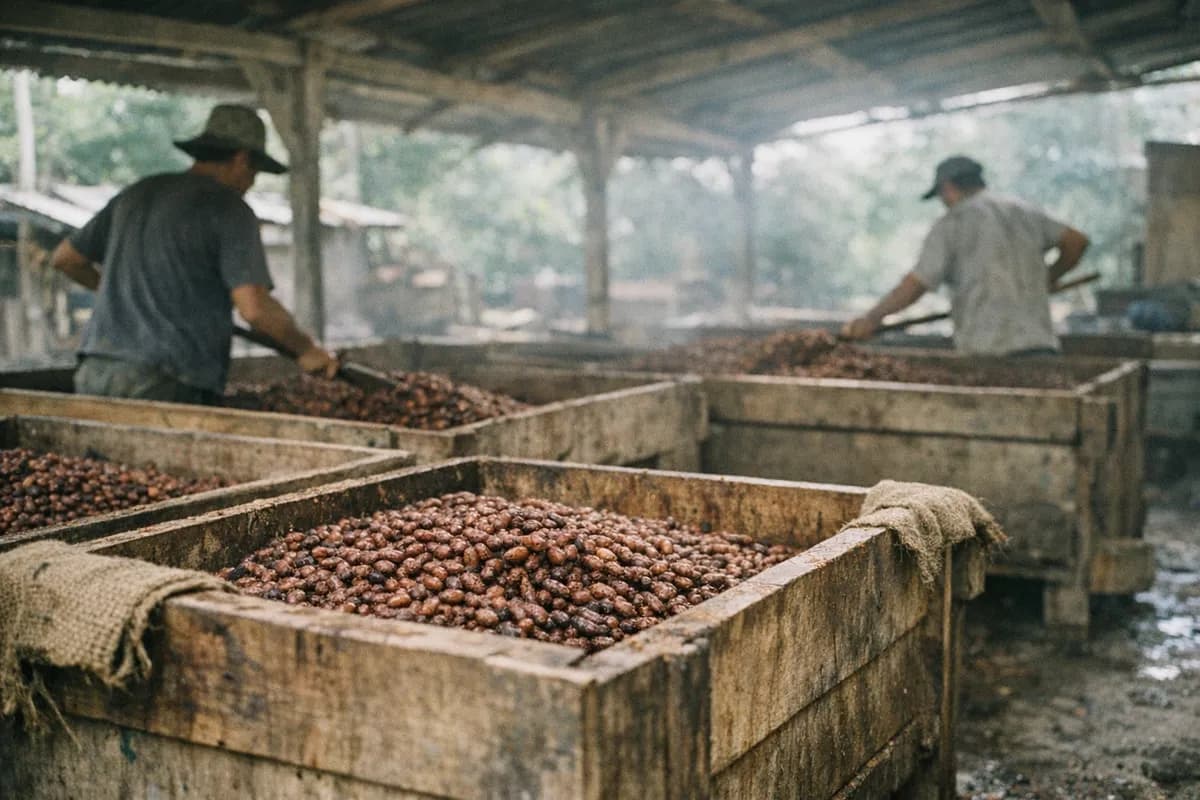
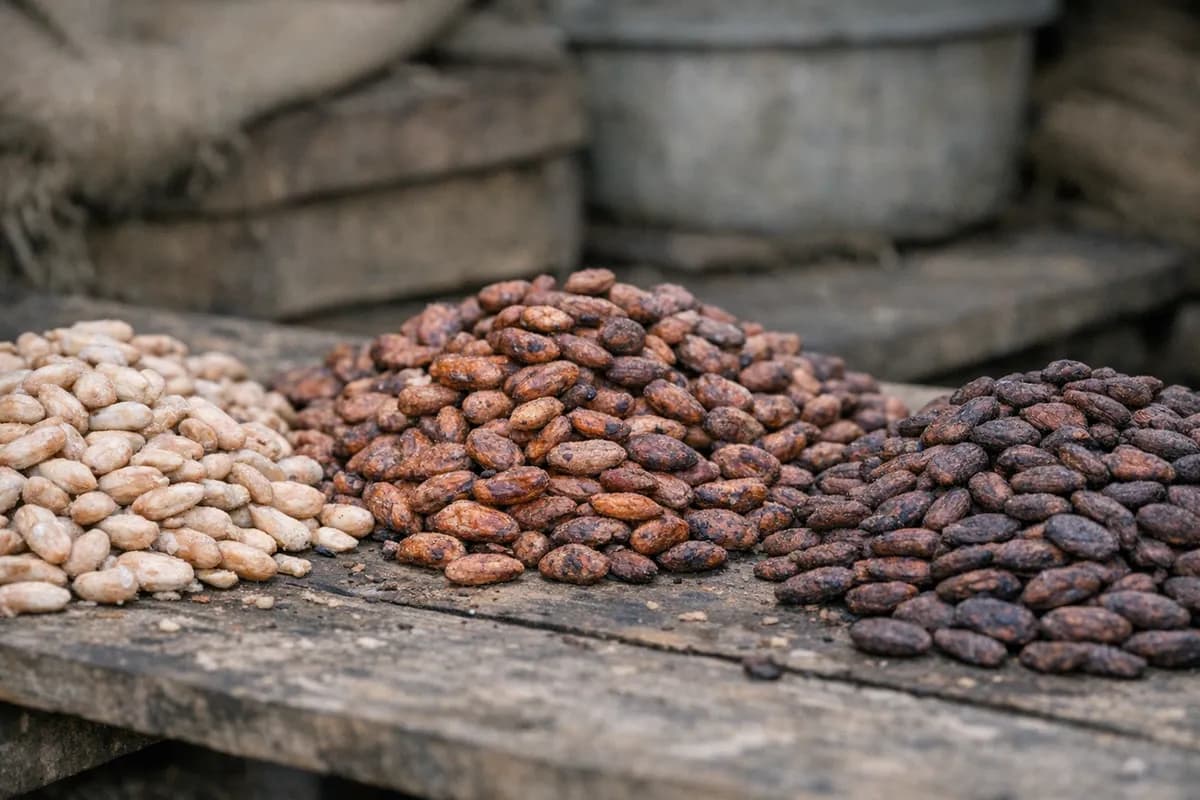
Fermentation is commonly assessed through a cut test. Beans are cut lengthwise, then the inside color and structure are inspected. Well-fermented beans normally show a different internal appearance from slaty or under-fermented beans. The cut test is not a flavor test by itself, but it tells the buyer whether the lot has followed the expected process path.
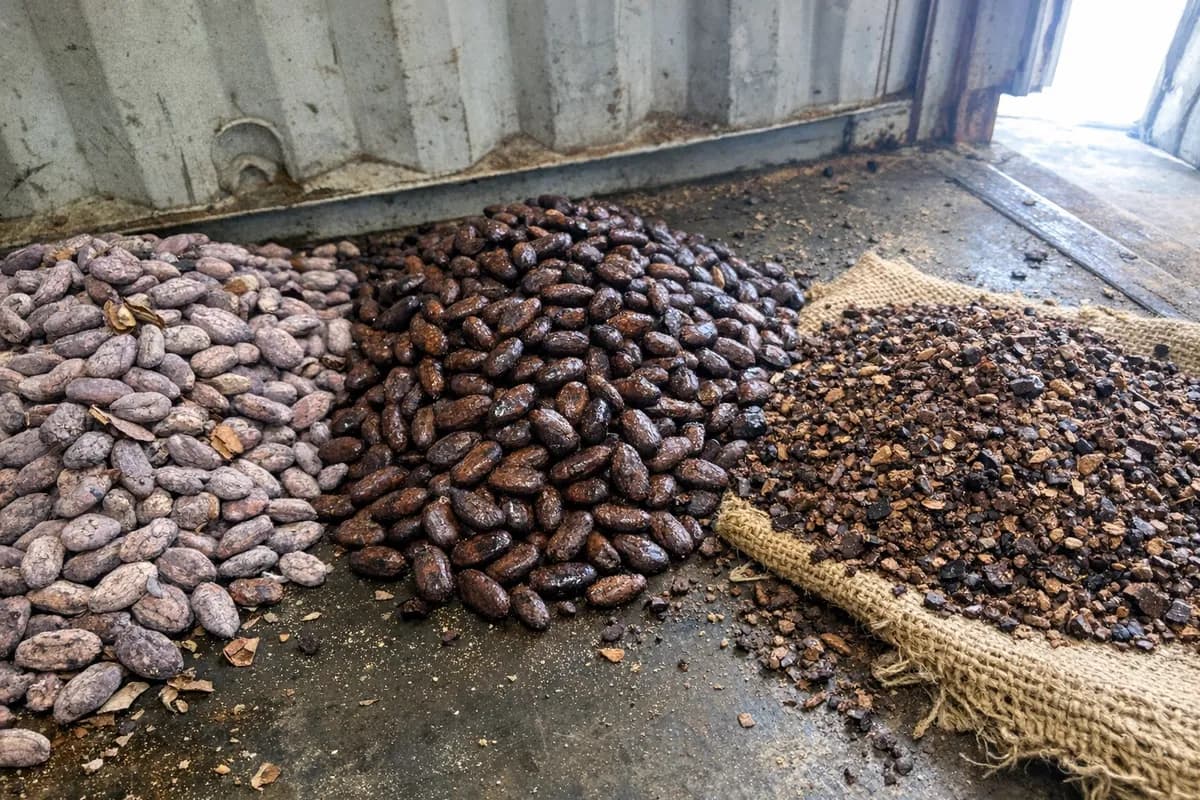
Defect checks should not be treated as a formality. Mouldy beans, insect-damaged beans, flat beans, germinated beans, foreign matter, smoky odor, and abnormal bag condition can all affect processing decisions. Some problems are visible in a small sample. Others only become clear when samples are drawn across multiple bags, which is why buyers should ask how the export sample was taken.
What factors affect cocoa bean quality beyond the grade name?
The grade name is only a shortcut. Cocoa bean quality is shaped by fermentation, drying, bean size, storage condition, defect level, and whether the process matches the buyer’s application.
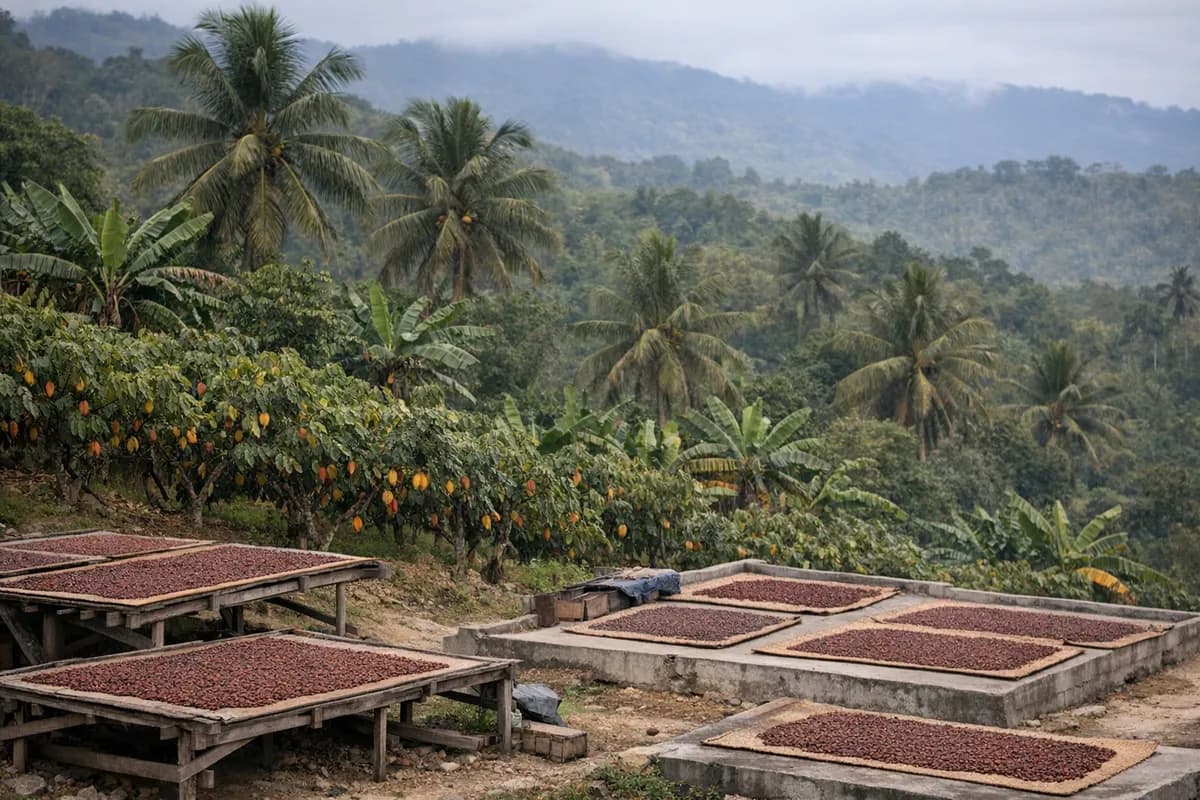
Fermentation affects flavor development and the internal appearance seen in a cut test. For chocolate production, fermentation level matters because the buyer is usually looking for flavor precursors that will show after roasting. For some industrial uses, unfermented beans may still be a practical fit, especially when the buyer is focused on pressing or grinding rather than chocolate-forward flavor.
Drying affects more than moisture percentage. Slow or uneven drying can leave a lot with variable bean condition, even if a sample looks acceptable at first glance. Buyers should check whether the beans smell clean, whether the bag surface feels dry, and whether the sample condition is consistent from bag to bag.
Bean size affects processing control. A roaster built around a fixed profile may struggle when one lot contains a wide spread of bean sizes. A tighter bean count does not automatically make a bean better for every recipe, but it does make the lot easier to compare against a factory’s existing roast settings.
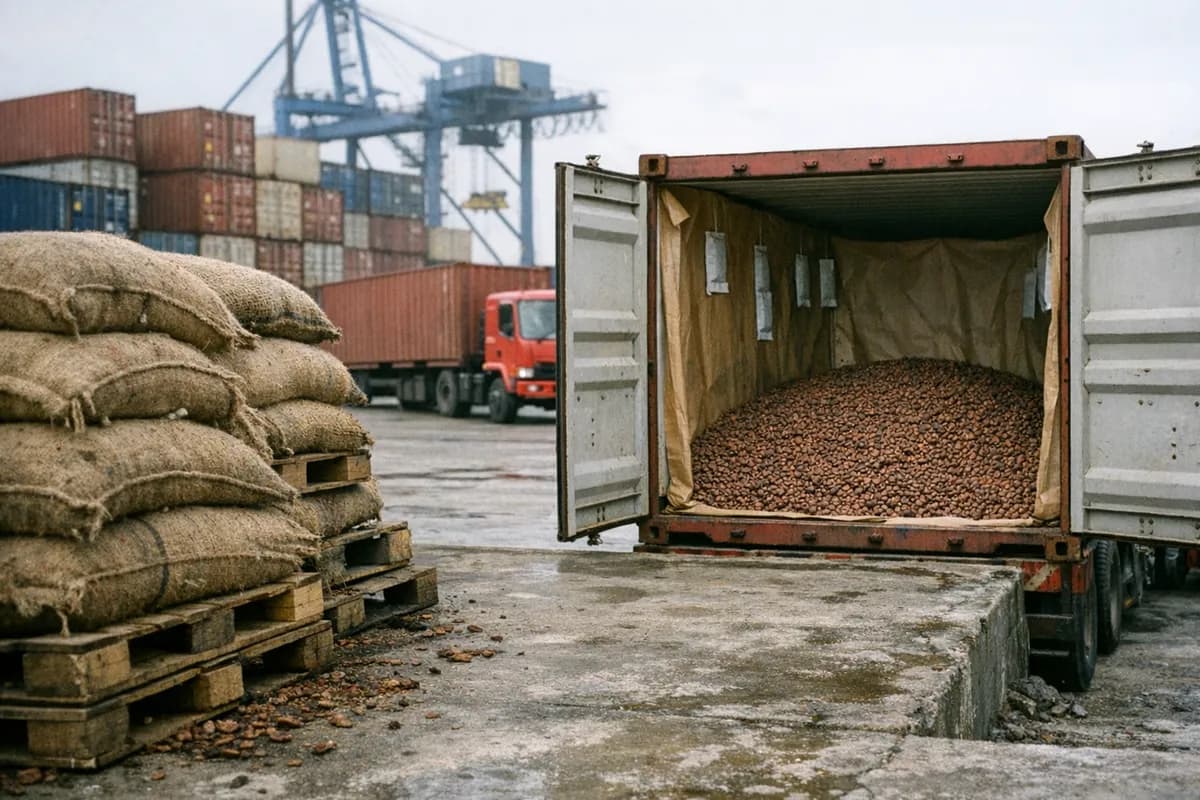
Packing is another overlooked indicator. Jute bags are common for export cocoa because they allow the beans to be handled, stacked, sampled, and counted in a conventional warehouse flow. Bulk packing can make sense for some industrial buyers, but the receiving system must be ready for it. The packing choice should be agreed before quotation, not after the buyer has approved the sample.
If your team is still deciding between fermented and unfermented supply, review our Indonesian cocoa products by grade, origin, and process before asking for a lot-specific offer.
How to determine the quality of cocoa beans on a sample or shipment?
Determine cocoa bean quality by testing the sample against the same specification that will appear in the contract, then repeating the critical checks when the shipment arrives. The buyer should not approve a sample on flavor alone if the purchase contract will be enforced on moisture, bean count, packing, and grade.
Start with the sample identity. Ask for the product name, origin, process type, grade, lot reference, packing format, proposed Incoterm, and expected shipment timing. The label on the sample should match the wording that will later appear on the proforma invoice, packing list, and shipping documents.
Next, run physical checks. Count beans per 100 g where the specification uses that metric. Check moisture with your normal receiving method. Cut the beans and record the fermentation appearance. Inspect for visible defects, foreign matter, odor, and signs that the sample has been cleaned or selected in a way that may not represent the shipment.
Then roast and evaluate. A raw bean inspection can identify obvious problems, but it cannot tell you how the lot will behave in your product. Use the same roast profile when comparing two origins or grades. Grind the roasted beans to liquor if that is how your factory evaluates cocoa. If the beans are intended for a finished chocolate, test them in the actual formula instead of judging only the liquor.
For shipment verification, match the commercial invoice, packing list, certificate of origin, phytosanitary certificate, bill of lading, bag marks, and lot references. Document matching will not prove flavor, but it helps prevent receiving errors. If a contract specifies a grade, origin, packing, or HS code, those details should be consistent across the paperwork.
What is the minimum order and price context for Indonesian cocoa beans?
Our fermented Grade A Sulawesi and Sumatra beans have a 13 MT minimum order, equal to 1 × 20 ft FCL, while our Java unfermented Grade B beans have a 5 MT minimum order. We do not publish a standing price figure because cocoa quotations depend on grade, process, packing, Incoterm, volume, certification requirement, shipment timing, and season.
Price comparison works only when the buying basis is the same. An FOB offer should not be compared directly with a CIF offer unless your team separates freight and insurance treatment. A Grade A fermented bean should not be compared only on unit price against an unfermented Grade B bean because the process and application are different.
Volume also changes the discussion. A full-container fermented Grade A order gives the buyer a different shipment structure from a smaller Grade B order. Packing matters as well: jute bags and bulk handling create different receiving work at the destination warehouse.
For a current quotation, send the destination port, requested grade, volume, preferred Incoterm, packing requirement, and certification need through our contact page. If your quality team has an internal cocoa bean specification sheet, attach it at the enquiry stage so we can quote against the same controls your factory will use at receiving.
Why is cocoa bean grading important for buyers?
Cocoa bean grading matters because it turns a supplier offer into a set of checks your procurement, quality, and production teams can use. Without measurable specifications, two lots with the same grade name may behave differently in roasting, storage, processing yield, or finished flavor.
For procurement, grading helps compare offers on more than price. A cheaper lot may carry wider bean count, higher moisture tolerance, a different process type, or a shipment term that shifts cost back to the buyer. Those details should be visible before the purchase order is issued.
For quality teams, grading creates the receiving checklist. The team can test moisture, review bean count, cut the beans, inspect defects, check bag condition, and compare documents against the contract. If the result does not match the agreed specification, the buyer has a clear basis for discussion.
For production, grading reduces surprises. A bean that fits the grade, process, and application is easier to schedule into roasting or grinding. A bean that passes only a visual inspection can still fail in the formula.
The practical route is to define the application first, then select the grade. Chocolate-focused buyers should compare fermented lots and run a sample roast before contracting. Industrial buyers that do not need fermented flavor development may evaluate unfermented Grade B supply as a separate use case, not as a direct substitute. For more buyer-side quality topics, our cocoa sourcing insights cover origin and application comparisons across Indonesian supply.