Indonesian Cocoa Export Duty: Buyer Cost Guide
Indonesia's PMK 68/2025 sets cocoa export duty tiers at 0%, 2.5%, 5%, and 7.5%. This guide shows buyers what to ask exporters to itemise.
By Aditya WijayaHead of Export SalesSix years structuring Indonesian cocoa programmes for chocolate makers and grinders across Europe and Southeast Asia.
Indonesia's cocoa export duty is an origin-side cost that can change how a cocoa offer compares once it reaches your warehouse. Under Peraturan Menteri Keuangan (PMK) 68/2025, Indonesia applies a tiered export duty on cocoa with published rates of 0%, 2.5%, 5%, and 7.5%, depending on the product category and the reference price band in force at shipment. Which tier applies to a given lot must still be confirmed against the regulation and the shipment's HS classification at booking time.
What we can control is how the cost is shown. As an export desk, we prefer to separate the product price, export-side charges, freight basis, insurance treatment where relevant, packing, documents, and shipment term before a buyer approves a proforma invoice. That makes your landed cost calculation easier to audit.
What is Indonesia's cocoa export duty?
Indonesia's cocoa export duty is a charge applied on the export side when the relevant product and shipment fall under the applicable Indonesian rules. The current framework buyers should ask about by name is PMK 68/2025, which publishes the tiered rates of 0%, 2.5%, 5%, and 7.5%. The exact tier and calculation basis for your shipment must be checked at booking, not assumed from an old quote or a supplier comment, because the applicable band can move with the reference price and the product form (beans versus processed cocoa).
For a buyer, the key point is not only whether the duty applies. The key point is where it appears in the offer. If the exporter includes it inside a single unit price, your procurement team may still be able to buy, but your cost analyst cannot see how much of the price is bean value and how much is an origin-side charge.
We recommend asking for the duty treatment before you compare suppliers. Use plain wording: “Please confirm whether Indonesian export duty applies to this cocoa shipment and show it as a separate line if included in the quoted price.” That request avoids a common problem where one seller quotes a clean FOB price with export duty embedded, while another quotes a lower-looking product price and adds origin charges later.
The product classification also matters. Whole cocoa beans in our export range are shipped under HS code 1801.00. Buyers should check that the same HS code appears consistently on the proforma invoice, commercial invoice, packing list, certificate of origin where used, and import customs entry. If your broker uses a different code at destination, ask them to explain the reason before you issue the purchase order.
For buyers still deciding which Indonesian bean type to source, our Indonesian cocoa beans page separates fermented and unfermented supply by origin, process, and grade.
How does export duty affect landed cost?
Export duty affects landed cost when it is part of the exporter's selling price or when it is added as a separate origin-side charge before shipment. Your landed cost model should show it before freight, insurance, destination duty, customs clearance, inland delivery, finance cost, and warehouse receiving cost.
The safest method is to build the cost from the quoted Incoterm outward. On an FOB offer, the exporter is quoting the goods delivered on board at the named Indonesian port, with export clearance handled by the seller under normal Incoterm practice. If export duty applies and the exporter has included it, the buyer should know whether it sits inside the FOB unit price or appears as a separate line.
On CFR, the seller also arranges main carriage to the named destination port, but insurance is not included under standard Incoterm use. On CIF, the seller arranges freight and insurance to the named destination port. The export duty question does not disappear under CFR or CIF. It is still an origin-side matter, and your landed cost file still needs to show whether it is embedded in the cocoa price or itemised.
This is where many buyer comparisons become distorted. A CIF offer can look higher than an FOB offer because it carries freight and insurance. That does not make the beans more expensive. It means the quote includes more services. The same logic applies to export duty. If one seller itemises it and another hides it inside the unit price, the comparison is incomplete until both offers are normalised.
Ask for the quote in a format your finance team can reuse. The line items should include product unit price, quantity, packing basis, export duty treatment (including which PMK 68/2025 tier the exporter is applying), Indonesian port charges if charged separately, document fees if any, ocean freight where the seller is arranging it, insurance where CIF is used, and the named port. Use the published tiers (0%, 2.5%, 5%, 7.5%) as the checklist; the exporter should still confirm the tier that applies to the shipment being quoted.
If you already know your destination port and shipment size, send those details through our contact page and ask for an itemised quotation on the Incoterm your broker prefers.
What should the exporter itemise before you approve a quote?
The exporter should itemise every cost that changes the landed calculation or shifts responsibility between seller and buyer. At minimum, ask for the cocoa price, export duty treatment, packing, origin handling, document basis, Incoterm, named port, freight inclusion, and insurance inclusion where relevant.
Do not rely on the word “included” unless the quote says what is included. A useful proforma invoice should let your team answer five questions without another email: What product is being shipped? What quantity is being shipped? Which Incoterm and named port apply? What origin-side charges are inside the price? Which documents will the exporter provide?
For cocoa beans, the product description should match the purchase order. If you order fermented Grade A beans, the quote should not describe the goods only as “Indonesian cocoa.” It should state the origin or agreed blend basis, process type, grade, packing, and HS code. For example, Sulawesi Fermented Cocoa Beans, Grade A are specified as fermented beans packed in 60 kg jute bags, with HS code 1801.00. That level of wording helps the buyer connect the commercial quote to the receiving specification.
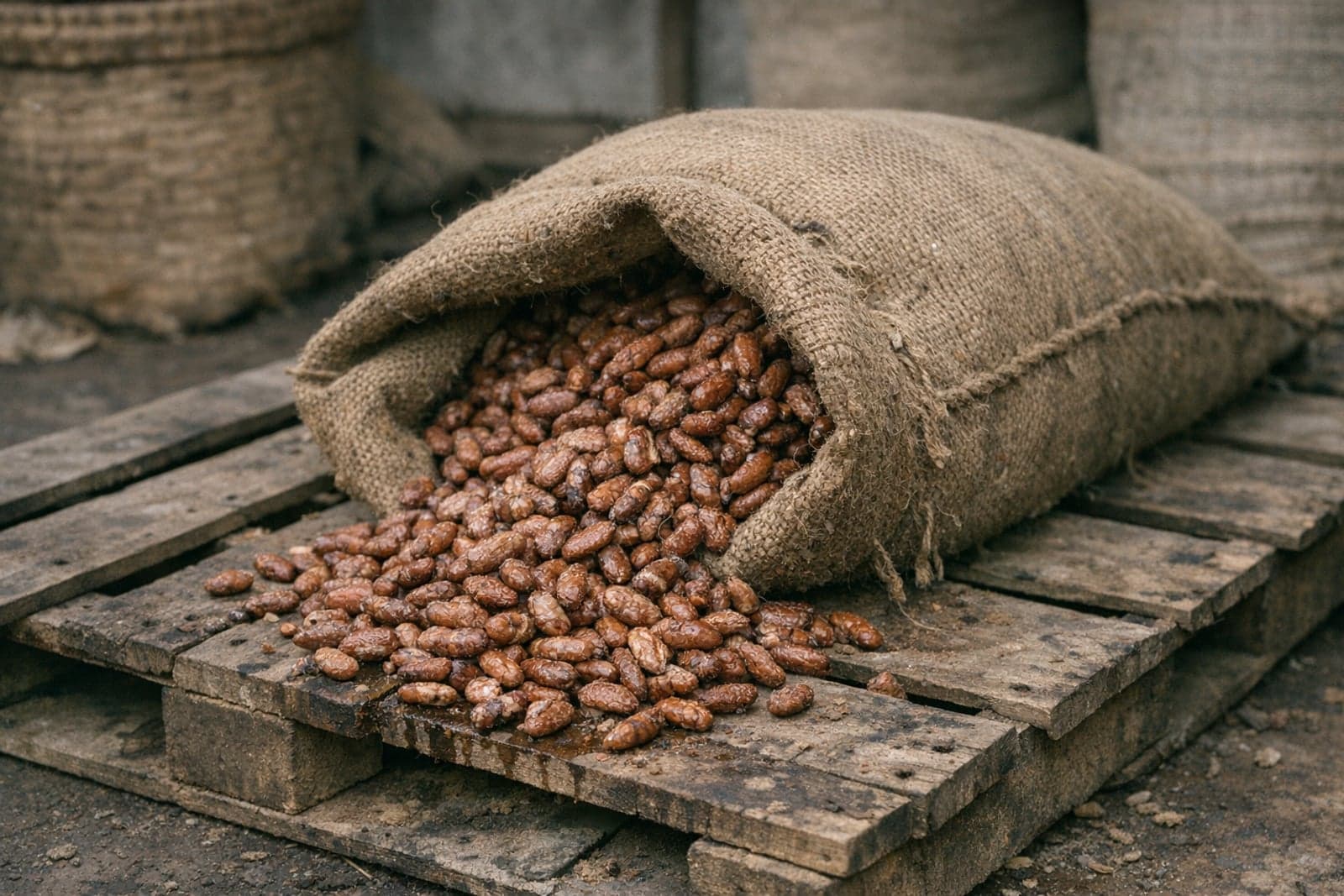
Featured product
Couverture Grade A, Sulawesi Fermented
Bean-to-bar and couverture fermented Sulawesi beans, cut-tested to ≥85% fermentation (house Grade A, SNI size class A).
Rainforest Alliance · ISO 22000 · Halal (BPJPH)
View specificationsExport documents should also be named before shipment. A typical cocoa shipment file may include a commercial invoice, packing list, bill of lading, certificate of origin, phytosanitary certificate, and any agreed quality or certification documents. The point is not to collect paperwork for its own sake. The point is to make sure the HS code, product description, quantity, bag count, gross weight, net weight, and consignee details are consistent.
Ask early about certificates. Some buyers require food safety, halal, sustainability, or customer-specific documents. In our range, fermented Grade A beans from Sulawesi, Sumatra, and Papua list Rainforest Alliance, ISO 22000, and Halal (BPJPH), while unfermented Grade B bean products list ISO 22000 and Halal (BPJPH). If a certificate is needed for customs clearance, customer approval, or internal vendor setup, it should be checked before the proforma invoice is approved.
What MOQ and price context should buyers expect?
Our fermented Grade A cocoa beans have a 13 MT minimum order, equal to 1 × 20 ft FCL. Our unfermented Grade B cocoa beans have a 5 MT minimum order, which fits buyers testing industrial applications or building volume before moving to container lots.
We do not publish a fixed cocoa price in this guide because a proper quotation depends on grade, process, packing, Incoterm, shipment volume, certification requirement, freight market at booking time, season, and whether export duty is included or shown separately. A number without those conditions would not help your procurement team.
Start with the application. If you are making chocolate where flavour development and cut-test appearance matter, fermented Grade A beans are usually the relevant comparison group. Our Grade A cocoa beans include Indonesian fermented lots where bean count, moisture, fermentation level, and defect limits are part of the buying discussion. If your plant is pressing, grinding, or using beans for industrial processing where fermented flavour is not the main driver, our Grade B cocoa beans may be the more practical route.
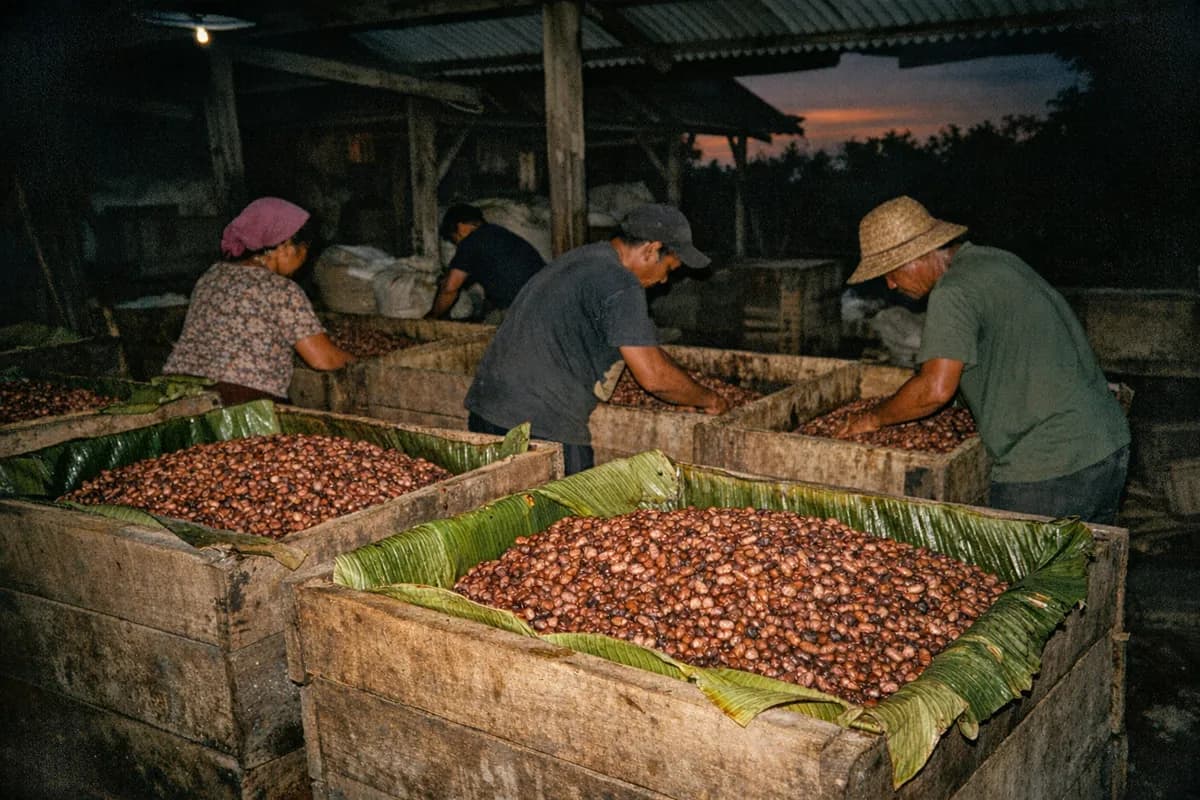
Packing also affects the quote. Fermented Grade A bean products in our range are packed in 60 kg jute bags. Unfermented Grade B bean products can be supplied in 60 kg jute bags or bulk, depending on the product. Jute bags make sampling, tallying, and warehouse handling straightforward. Bulk can suit a receiving system built for it, but it should be agreed before pricing because handling assumptions change.
When you request a quote, send the product target, volume, destination port, Incoterm preference, packing requirement, certificate needs, and whether you need export duty shown as a separate line. That gives us enough information to price the same shipment your landed cost team is modelling.
Which Incoterm makes export duty easier to control?
FOB usually gives buyers the clearest separation between Indonesian origin costs and buyer-controlled ocean freight, while CFR and CIF can be useful when the buyer wants the exporter to arrange carriage. The right choice depends on your freight setup and how your finance team reviews landed cost.
Under FOB, your team or forwarder controls the main freight booking after the goods are loaded on board at the named Indonesian port. This can help when your company has contracted freight rates or a preferred carrier process. You still need the exporter to confirm export duty treatment, because export clearance sits on the seller side under normal FOB practice.
Under CFR, the exporter arranges freight to the destination port. This can reduce coordination work for buyers who do not have regular Indonesia bookings. But your quote review must separate the cocoa value from the freight component. Otherwise, a freight movement can be mistaken for a change in bean price.
Under CIF, the exporter arranges freight and insurance. This can be practical for buyers who want one origin-side party to manage booking and insurance documentation. The trade-off is that your team must check the insurance terms against your internal requirements. If your company has its own cargo policy, CIF may duplicate cover or create claims handling questions.
For cocoa beans in our range, Incoterms differ by product. Sulawesi and Papua fermented Grade A beans are available on FOB, CIF, or CFR. Sumatra fermented Grade A beans are available on FOB or CIF. Java and Sulawesi unfermented Grade B beans are available on FOB, CFR, or CIF. Choose the term before asking for final price, because the named term changes which costs sit in the exporter's quote.
If moisture control and container condition are also part of your risk review, read our guide to dry container preparation for Indonesian cocoa beans before booking shipment.
How should buyers check duty treatment before ordering?
Check duty treatment in writing before the proforma invoice becomes the working document for payment, shipping, and customs. The question should be direct: “Is Indonesian export duty applicable to this shipment, and is it included in the quoted price or itemised separately?”
Then check that the answer matches the documents. The proforma invoice should show the product, HS code, quantity, Incoterm, named port, packing, and any itemised export-side charges. The purchase order should not use different wording. If the quote says FOB but the purchase order says CIF, your landed cost calculation is no longer tied to the same responsibility split.
Before shipment, ask for draft documents where possible. Review the commercial invoice, packing list, bill of lading draft, certificate of origin details, and phytosanitary document details against the approved quote. Your broker should confirm whether the HS code and product description are workable for the import entry at destination.
Finally, keep the duty discussion separate from quality approval. A clean cost breakdown does not replace a sample, cut test, moisture check, or bag inspection. For Indonesian cocoa beans, the buying file should connect both sides: an itemised commercial quote for landed cost, plus a product specification your receiving team can verify when the shipment arrives.