Java Cocoa Beans Quality Factors for Buyers
Java cocoa beans quality factors affect roasting, processing yield, and flavour targets, so buyers need clear grading and sourcing checks.
By Aditya WijayaHead of Export SalesSix years structuring Indonesian cocoa programmes for chocolate makers and grinders across Europe and Southeast Asia.
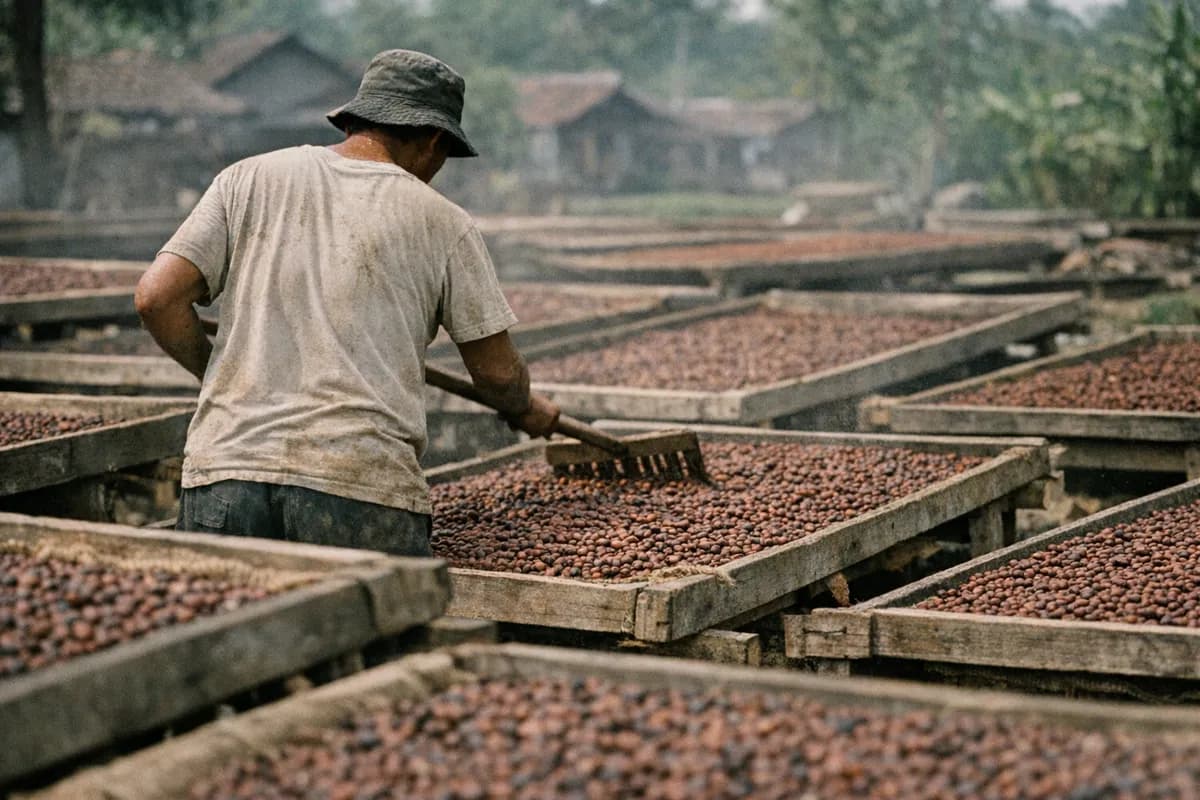
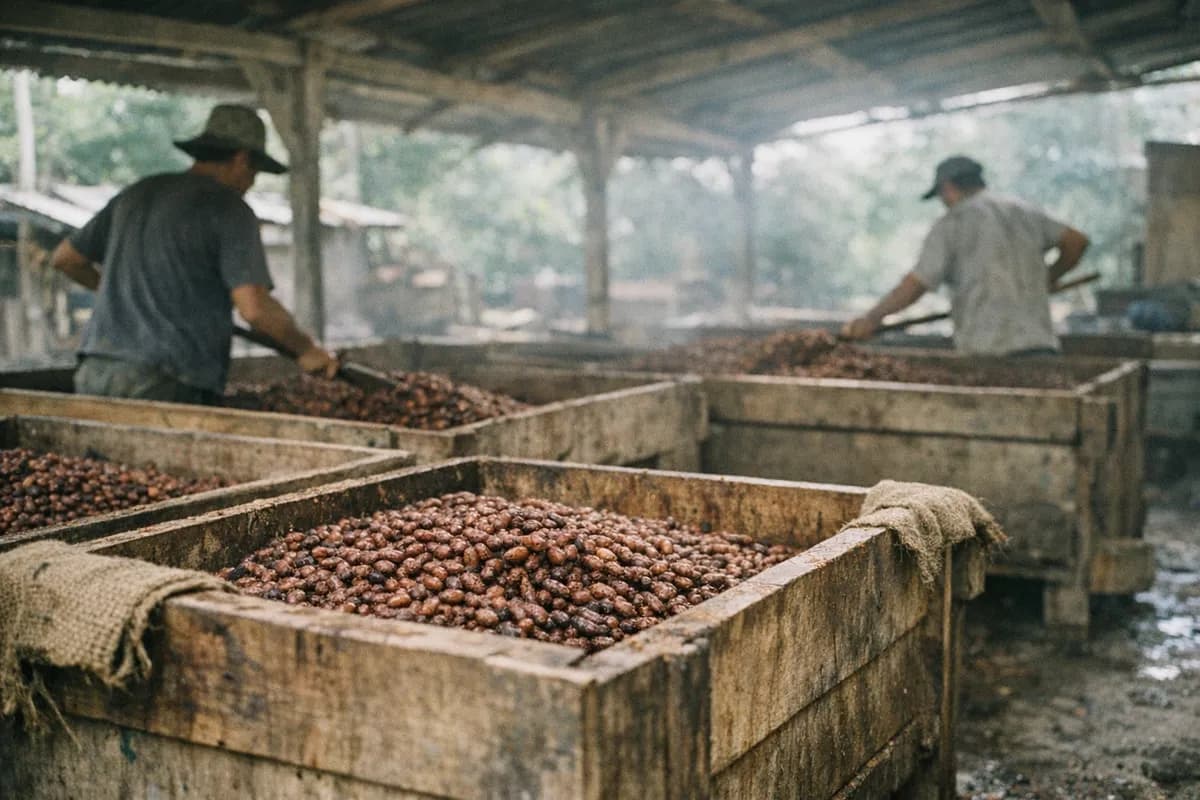
Java cocoa beans should be evaluated by process, grade, moisture, bean count, packing, and intended use. A Java lot can be suitable for one factory brief and unsuitable for another if the buyer treats origin name as the only quality signal.
At Indonesia Cacao, our Java offer is an unfermented Grade B export item. We position it differently from fermented Grade A Indonesian cocoa because the quality decision starts with application: chocolate flavour development, cocoa liquor, compound production, butter pressing, or other industrial processing.
What are the quality standards for Java cocoa beans?
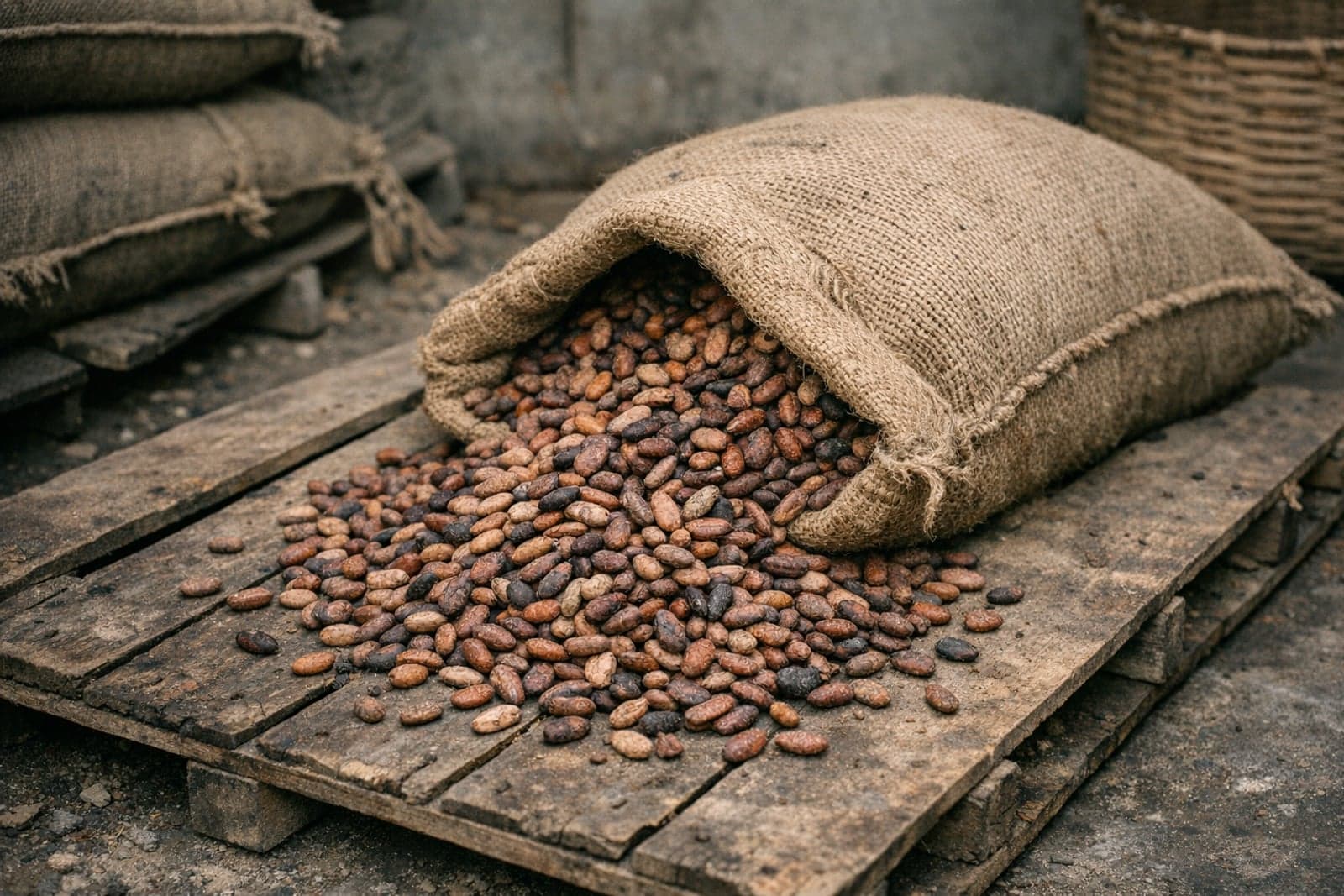
For our Java supply, the quality standard is an unfermented house Grade B specification (SNI size class C) built around bean count, moisture, packing format, shipment term, and export documentation. Our Java Unfermented Cocoa Beans, Grade B are specified at ≤ 120 beans / 100 g, ≤ 7.5% moisture, a 5 MT minimum order, 60 kg jute bags or bulk packing, 1–2 weeks lead time, FOB, CFR, or CIF Incoterms, and HS code 1801.00.
Featured product
Pressing Grade B, Java Unfermented
Bulk unfermented beans from East Java for cocoa butter pressing and industrial applications (house Grade B, SNI size class C).
ISO 22000 · Halal (BPJPH)
View specificationsThose fields should appear in the buyer’s purchase specification before price is discussed. If a buyer asks only for “Java cocoa beans,” the supplier may quote a lot that is correct by origin but wrong by process, size range, or end use.
Bean count is a practical roasting and processing check. A lower count per 100 g means larger average beans. A higher count means smaller average beans. What matters for the factory is not just the number itself, but whether the lot behaves consistently under the buyer’s roast profile, winnowing setup, and grinding line.
Moisture is the other first check. Cocoa beans move through humid environments during storage and shipment, so buyers should verify moisture at receiving before long-term storage or production release. A lot that is inside specification at loading should still be checked on arrival because factory acceptance is based on delivered condition.
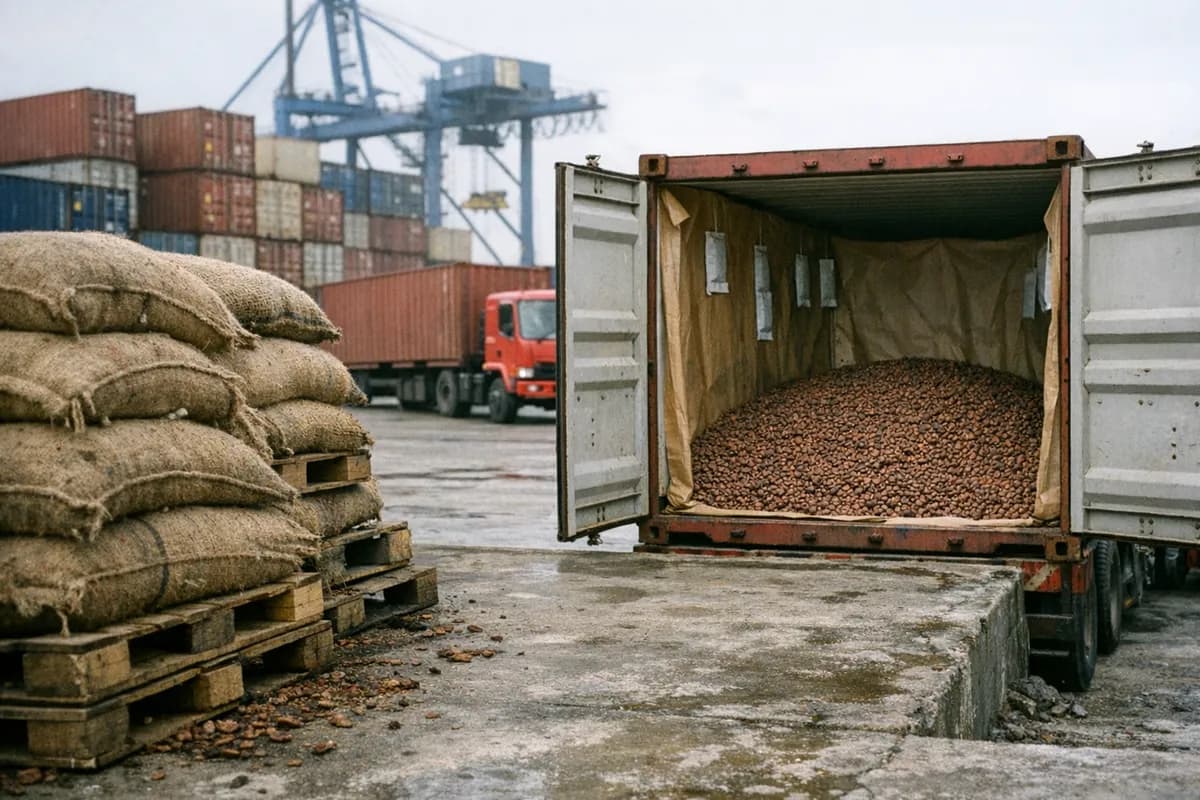
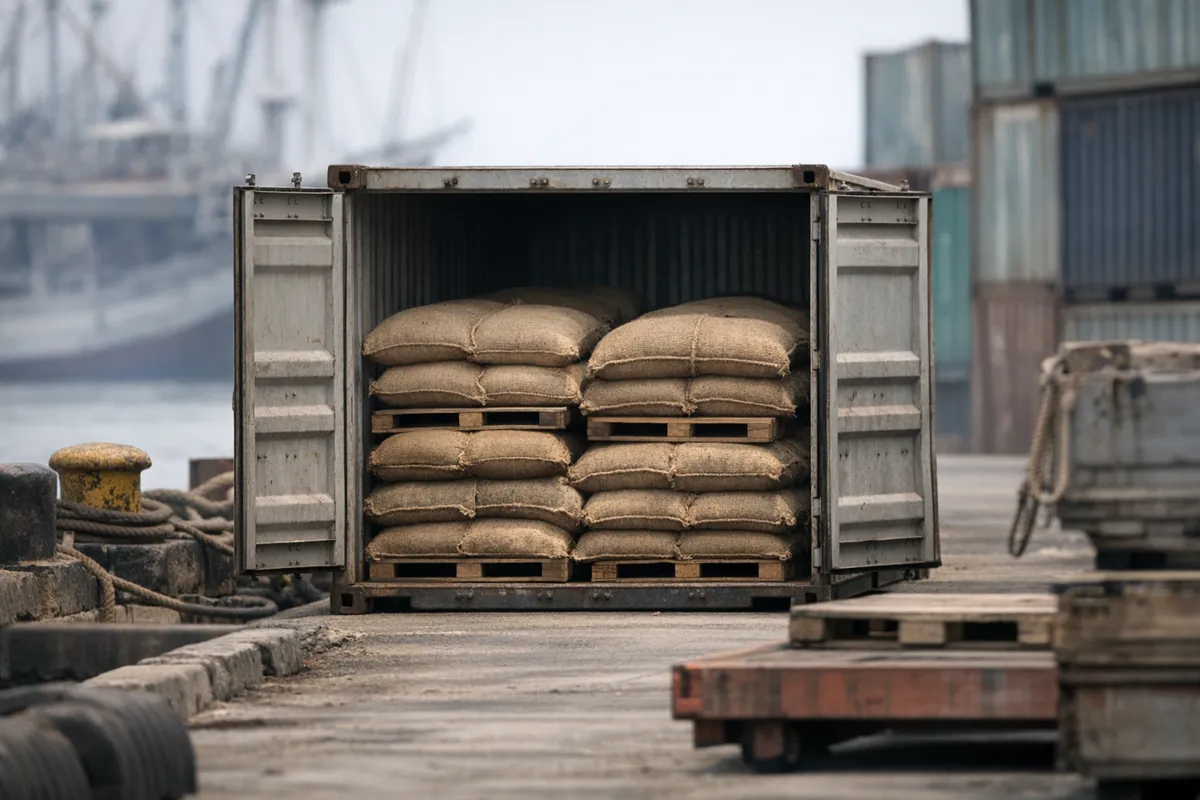
Packing also affects handling. Jute bags are easier for lot separation, manual sampling, and warehouse stacking. Bulk packing may suit buyers who receive and process larger volumes with the right discharge system. The packing choice should be agreed before quotation because it changes the handling plan at both ends.
Is there a specific grade for Java cocoa beans?
Yes. Our current Java export item is Grade B and unfermented, so it should not be specified as a direct substitute for fermented Grade A beans without a production trial.
Grade labels must be read together with process. Grade B does not tell the whole story unless the buyer also confirms whether the beans are fermented or unfermented. For Java, the process is central because unfermented beans will not give the same flavour development path as fermented cocoa when roasted for chocolate.
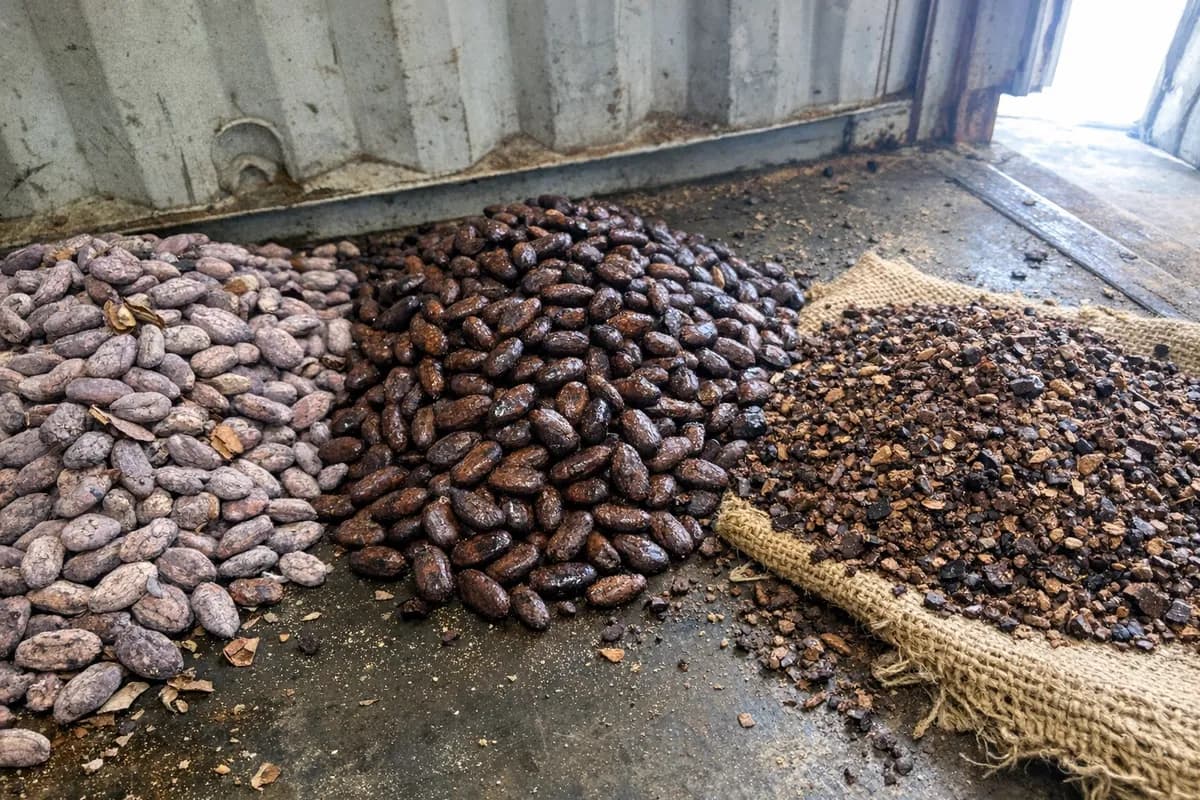
A cut test is the simplest first screen. The buyer can inspect internal bean colour, slaty appearance, mould, insect damage, flat beans, and other visible defects. For unfermented beans, the cut-test expectation is different from fermented cocoa; the question is not whether the lot shows a high fermentation level, but whether the physical condition matches the agreed industrial use.
That distinction matters in chocolate work. Fermentation develops flavour precursors that later respond to roasting. If a buyer’s finished chocolate depends on pronounced cocoa flavour, rounded acidity, or origin-led sensory character, an unfermented Java Grade B lot may not be the first sample to test. If the buyer is focused on grinding economics, fat extraction, blending, or industrial use where a fermented profile is not required, Java Grade B may be relevant.
Buyers comparing grades can review our Grade B cocoa beans page for the Java route, then compare it with fermented Indonesian items only if the application allows both options.
How does Java cocoa compare to other Indonesian cocoa?
Our Java cocoa differs from our Sulawesi and Sumatra export items mainly by process, grade, minimum order, lead time, and commercial use case. Java is an unfermented Grade B item, while our Sulawesi and Sumatra products are fermented Grade A items.
That means the comparison should not start with “which origin is better?” It should start with “which process fits the product?” Fermented beans are usually selected when the buyer needs flavour development for chocolate or cocoa liquor. Unfermented beans are usually assessed for processing routes where full fermentation is not the main quality requirement.
For buyers evaluating Indonesian origins for chocolate-forward formulations, our Sulawesi Fermented Cocoa Beans, Grade A and Sumatra fermented options sit in a different category from Java Grade B. They are not priced, graded, or sampled against the same brief unless the buyer is deliberately testing a cost-performance blend.
Java can still be the right origin when the factory wants a documented Indonesian cocoa lot with a shorter shipment preparation timeline and a smaller entry volume. The 5 MT minimum order allows a buyer to trial the material without immediately committing to a full-container fermented Grade A purchase. That can be useful for qualification, pilot runs, or a controlled production test.
If your team is screening by origin first, start with our Java cocoa beans page, then narrow the request by process and grade. Origin is the headline; specification is what protects the production result.
What should a buyer consider when sourcing Java cocoa beans?
A buyer should first confirm the intended application, then match the lot against process, moisture, bean count, packing, shipment term, and documents. For Java cocoa, the key decision is whether unfermented Grade B material fits the factory’s product brief.
We ask buyers to separate sensory needs from processing needs. If the product is a finished chocolate where fermentation character matters, request a sample and run it beside a fermented origin. If the product is an industrial cocoa input, evaluate the Java lot through yield, shell content checks, roast behaviour, grinding performance, and the buyer’s internal defect limits.
A useful sourcing brief includes the following points in plain language:
- Product application: chocolate, liquor, powder, butter pressing, compound, filling, coating, or other processing.
- Required process: unfermented or fermented.
- Target grade or internal factory specification.
- Requested packing: jute bags or bulk.
- Destination port and preferred FOB handling.
- Required documents for customs clearance and internal supplier approval.
- Sampling method and acceptance test before shipment.
Do not skip sample preparation. Raw bean smell and appearance can catch obvious problems, but they do not replace a controlled roast and grind. Use the same roast profile for competing samples, record weight loss, then evaluate liquor or nibs under the same conditions. If your factory normally tests microbiology, heavy metals, pesticide residue, or other compliance parameters, state that before contracting so the testing route is clear.
For a current Java sample discussion, send your application, destination port, and preferred packing through our contact page. We can respond against the Java Grade B route rather than giving a generic Indonesian cocoa quote.
What is the minimum order and price context for Java cocoa beans?
Our minimum order for Java cocoa beans is 5 MT. We do not publish a standing price because each quotation depends on grade, packing, Incoterm, volume, shipment timing, and season.
FOB pricing should be compared only with FOB pricing. If a buyer compares a Java FOB quote with a CIF offer from another origin, freight and insurance will distort the comparison. The better method is to request the same Incoterm, shipment window, packing format, and destination assumptions across all offers.
Packing can also affect cost and handling. Jute bags support bag-level receiving and sampling. Bulk packing can reduce bag handling but requires suitable receiving arrangements. The right answer depends on the buyer’s warehouse, discharge system, and internal traceability process.
Volume changes the discussion as well. A 5 MT trial order is useful for qualification, but it may not reflect the same commercial structure as repeat shipments. Buyers planning regular procurement should tell us the trial volume and the expected follow-on volume separately so the quotation reflects the buying path.
A complete quote request should include buyer company details, product application, volume, packing preference, destination port, required shipment window, and any internal specification sheet. That lets us quote the Java item directly instead of guessing which quality factors matter most to the factory.
What are the benefits of using Java cocoa beans?
The main benefit of Java cocoa beans in our range is sourcing fit: unfermented Grade B material can suit buyers who do not need a fermented Grade A flavour profile and want a defined Indonesian cocoa specification. The value is in matching the lot to the right industrial or blending application.
For chocolate manufacturers, the benefit is not automatic. Java unfermented beans must be tested in the actual recipe before approval. If the finished product needs strong fermentation-derived flavour, a fermented Indonesian origin may be a better starting point. If the formula uses Java as part of a blend, the buyer should test how the beans behave after roasting, grinding, and mixing with the other cocoa components.
For processors, the practical advantages are easier to define. The buyer can specify a Grade B Java lot, choose jute bags or bulk packing, and work from a smaller minimum order than our fermented full-container items. That makes the origin useful for controlled trials, new supplier approval, or a defined industrial application.
The best sourcing decision is made in sequence: define the finished product, confirm whether fermentation is required, review the Java Grade B specification, request a representative sample, run the factory test, then move to contract terms. If Java fits the result, we can quote against the agreed volume and FOB shipment plan through the same procurement file.