Indonesian SNI Cocoa Bean Grading: Size vs Grade
SNI cocoa bean grading explained for Indonesian buyers: learn how bean count size classes differ from commercial grades before ordering.
By Aditya WijayaHead of Export SalesSix years structuring Indonesian cocoa programmes for chocolate makers and grinders across Europe and Southeast Asia.
SNI cocoa bean size class is often confused with cocoa bean quality grade. For Indonesian supply, buyers should separate the two before approving a sample or comparing supplier offers.
At Indonesia Cacao, we use SNI size class to describe bean count, which is a size measurement. We use our Grade A and Grade B labels to describe a wider buying specification that also covers process type, moisture, fermentation level where applicable, fat content, defect limits, packing, order size, and shipment terms.
What does SNI cocoa bean size class mean for Indonesian beans?
SNI size class tells the buyer about bean count, usually expressed as the number of beans per 100 g. It is a size control, not a complete quality approval.
In practical buying terms, a lower bean count per 100 g means a larger average bean size. That matters for roasting, winnowing, grinding preparation, and yield checks. A lot with smaller beans may still be usable, but it should not be treated as the same processing input as a lot with larger beans unless your factory has tested it.
For our Indonesian cocoa bean range, SNI size class appears next to a measured bean count. Sulawesi Fermented Cocoa Beans, Grade A and Papua Fermented Cocoa Beans, Grade A are specified at ≤ 100 beans per 100 g, SNI size class A. Sumatra Fermented Cocoa Beans, Grade A is specified at ≤ 105 beans per 100 g, SNI size class B. Sulawesi Unfermented Cocoa Beans, Grade B is specified at ≤ 110 beans per 100 g, SNI size class B. Java Unfermented Cocoa Beans, Grade B is specified at ≤ 120 beans per 100 g, SNI size class C.
Featured product
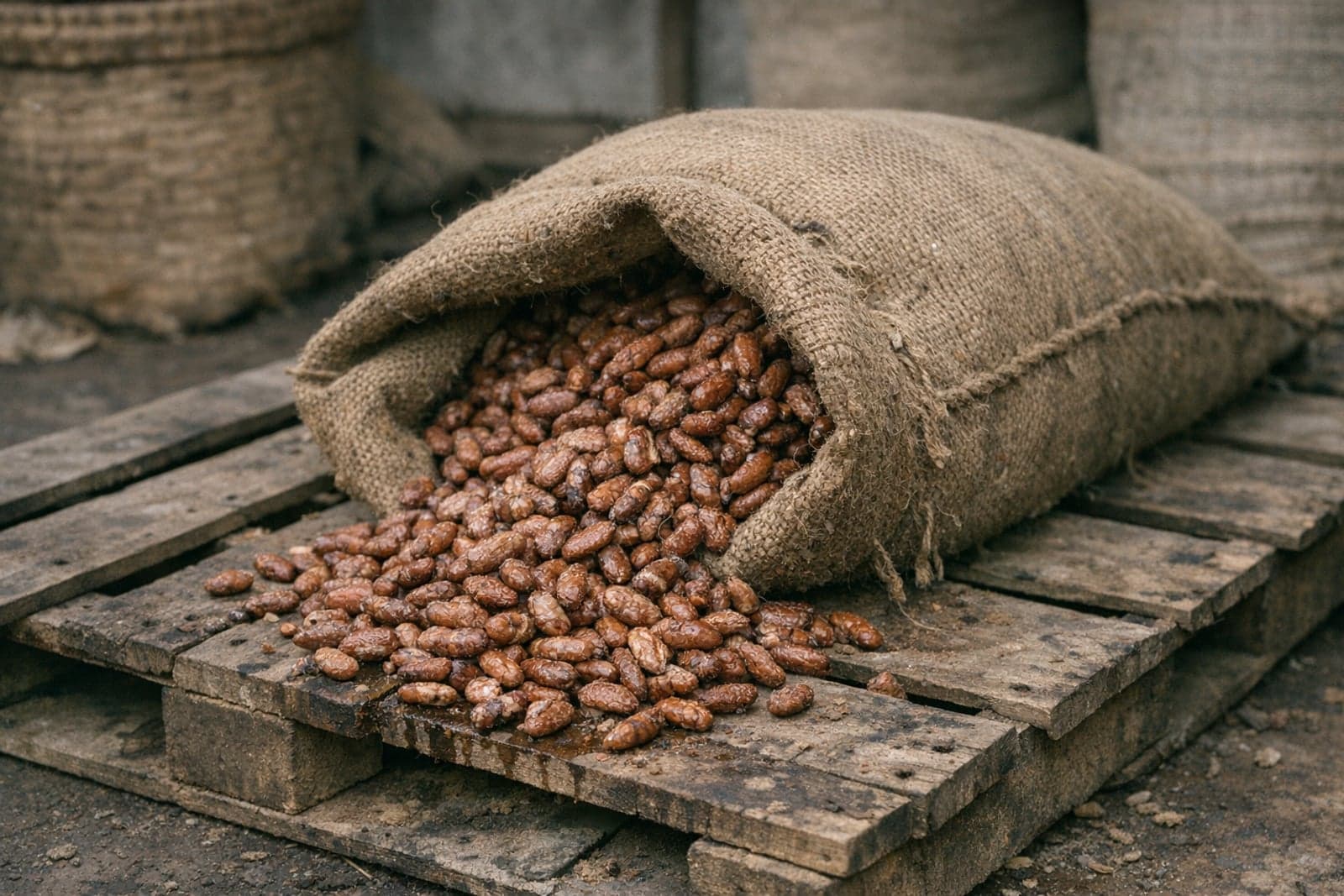
Couverture Grade A, Sulawesi Fermented
Bean-to-bar and couverture fermented Sulawesi beans, cut-tested to ≥85% fermentation (house Grade A, SNI size class A).
Rainforest Alliance · ISO 22000 · Halal (BPJPH)
View specificationsThat size class helps a buyer compare lots, but it does not answer every quality question. It does not tell you whether the beans are fermented, how dry they are, what defect tolerance applies, or which packing and shipment terms are available.
How are SNI size classes different from Grade A and Grade B?
SNI size class is a bean size category. Grade A and Grade B, as we use them in our export offers, are commercial product grades that combine size with process, moisture, defect controls, fat content, order basis, and intended use.
This distinction is not academic. A buyer can see the difference in two common comparisons.
| Indonesian cocoa lot | SNI size class and bean count | Our commercial grade | Process and main quality controls | Order basis |
|---|---|---|---|---|
| Sulawesi Fermented Cocoa Beans | Class A, ≤ 100 / 100 g | Grade A | Fermented, ≥ 85% fermentation, ≤ 7.5% moisture, ≥ 52% fat, mouldy ≤ 3%, slaty ≤ 3%, insect-damaged ≤ 1% | 13 MT, 60 kg jute bags, 2 to 3 weeks |
| Sumatra Fermented Cocoa Beans | Class B, ≤ 105 / 100 g | Grade A | Fermented, ≥ 80% fermentation, ≤ 7.5% moisture, ≥ 52% fat, mouldy ≤ 3%, slaty ≤ 3%, insect-damaged ≤ 1% | 13 MT, 60 kg jute bags, 3 to 4 weeks |
| Sulawesi Unfermented Cocoa Beans | Class B, ≤ 110 / 100 g | Grade B | Unfermented, ≤ 7.5% moisture, ≥ 50% fat, mouldy ≤ 5%, slaty ≤ 5%, insect-damaged ≤ 2% | 5 MT, 60 kg jute bags or bulk, 1 to 2 weeks |
| Java Unfermented Cocoa Beans | Class C, ≤ 120 / 100 g | Grade B | Unfermented, ≤ 7.5% moisture, ≥ 50% fat, mouldy ≤ 5%, slaty ≤ 5%, insect-damaged ≤ 2% | 5 MT, 60 kg jute bags or bulk, 1 to 2 weeks |
The table shows two buying lessons. First, Grade A is not always SNI size class A. Our Sumatra Fermented Cocoa Beans, Grade A are Grade A in our commercial range, but the stated SNI size class is B. Second, SNI size class B is not automatically one quality grade. Sumatra fermented Grade A and Sulawesi unfermented Grade B both use size class B, but they are different products for different applications.
When comparing offers from different suppliers, ask for both fields in writing: the SNI size class with bean count, and the commercial grade with its full acceptance specification.
Which Indonesian grade should a buyer specify for chocolate or industrial processing?
For chocolate-focused work, buyers usually start with fermented Grade A lots because fermentation level is part of the buying specification. For pressing, grinding, or industrial applications where fermented flavor development is not the main target, unfermented Grade B lots may be a better fit.
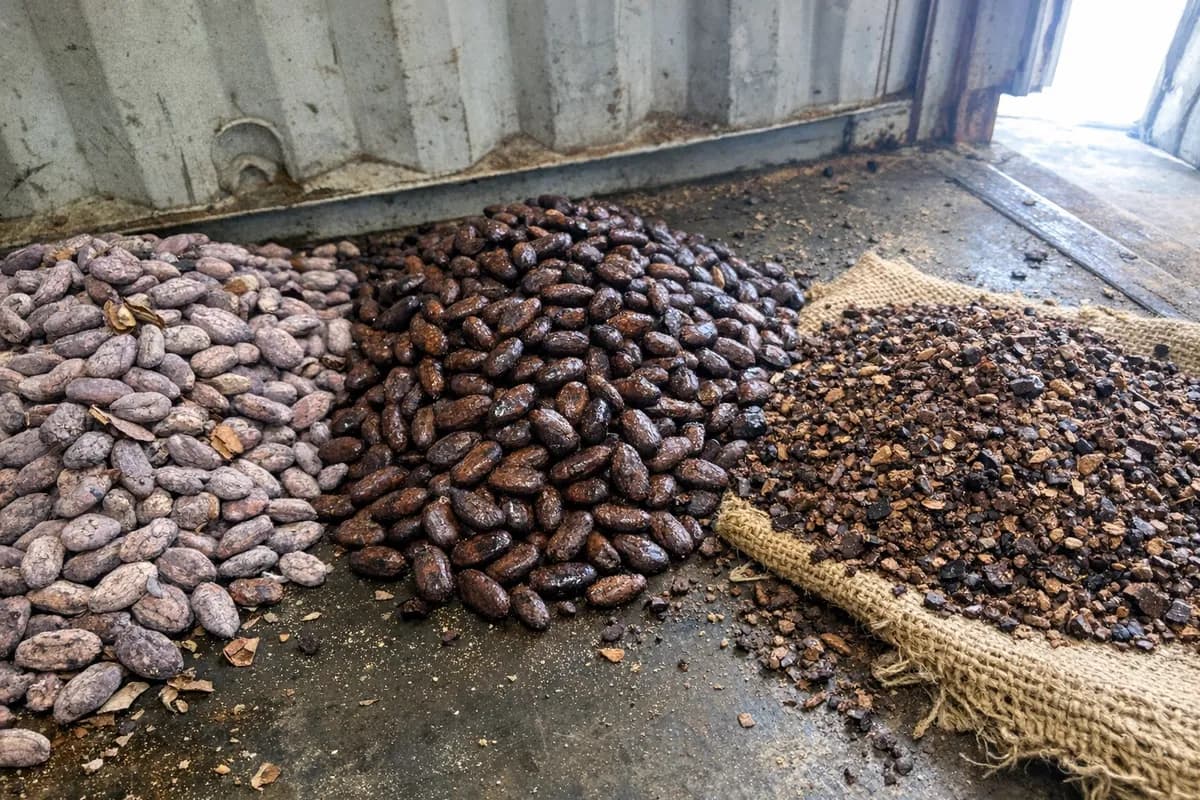
Fermented beans should be evaluated by cut-test appearance and then by roast trial. The cut test helps confirm whether the lot followed the expected fermentation path. The roast trial tells your team how the beans behave in your own formula. If your product depends on origin character, do not rely only on the size class.
For this route, buyers can compare our fermented cocoa beans, including Sulawesi, Sumatra, and Papua lots. The practical decision is not only origin. It is the combination of bean count, fermentation target, defect level, lead time, and whether the lot can be shipped under your preferred Incoterm.
Unfermented beans should be treated as a separate specification, not as a cheaper substitute for fermented beans. They are useful when the buyer’s process does not require the same fermentation-driven flavor development. Our unfermented cocoa beans from Sulawesi and Java are specified for industrial use, with lower minimum order size than our fermented Grade A lots.
If your quality team needs a sample before setting the purchase specification, send us the target application and destination port through our contact page. We can align the sample discussion with the grade you plan to quote.
What should be written in the purchase specification?
A purchase specification should state both the size class and the quality grade controls. The grade name alone is not enough for receiving inspection or claim handling.
For Indonesian cocoa beans, we recommend that buyers write the specification in the same order that the receiving team will test it:
- Origin and product name
- Process type, fermented or unfermented
- Commercial grade
- SNI size class and bean count per 100 g
- Moisture limit
- Fermentation level for fermented lots
- Fat content
- Mouldy, slaty, and insect-damaged bean limits
- Packing format
- Minimum order or contracted shipment size
- Lead time expectation
- Incoterm
- Certification requirement where applicable
- HS code for customs documentation
For our current export range, cocoa beans are shipped under HS code 1801.00. Fermented Grade A Sulawesi and Papua lots are available on FOB, CIF, or CFR terms, while Sumatra fermented Grade A is available on FOB or CIF. Java and Sulawesi unfermented Grade B are available on FOB, CFR, or CIF. Rainforest Alliance is available for the fermented Grade A lots listed in our range, while ISO 22000 and Halal (BPJPH) apply to the products stated in each product specification.
Packing also needs to be fixed before quotation. Our fermented Grade A lots are packed in 60 kg jute bags. Our Java and Sulawesi unfermented Grade B lots can be packed in 60 kg jute bags or bulk. That choice affects container handling, warehouse receiving, sampling, and discharge planning.
What is the minimum order and price context for Indonesian cocoa beans?
Our fermented Grade A lots have a 13 MT minimum order, equal to 1 × 20 ft FCL. Our unfermented Grade B lots have a 5 MT minimum order.
We do not publish a standing price figure because a cocoa bean quotation has to be tied to the exact buying basis. The price depends on grade, process, packing, Incoterm, volume, certification requirement, shipment timing, and season. A CIF quotation should not be compared directly with an FOB quotation unless your procurement team separates freight and insurance treatment.
Grade comparison also needs care. A fermented Grade A lot and an unfermented Grade B lot do not serve the same function in most factories. If the application is chocolate production, the buyer should judge the fermented lot by cut test, roast result, defect controls, and formula fit. If the application is pressing or industrial grinding, the buyer may focus more on fat content, moisture, defect tolerance, packing, and discharge method.
For a current quotation, send the destination port, requested product, volume, Incoterm, packing preference, and certification requirement through our contact page. If you already have an internal cocoa bean specification, include it with the enquiry so we can quote against the same controls your receiving team will use.
How should a buyer verify the grade before shipment and on arrival?
A buyer should verify the grade by testing a representative sample before shipment, then repeating the critical checks when the container arrives. The same specification should be used at sample approval, contract stage, pre-shipment check, and receiving.
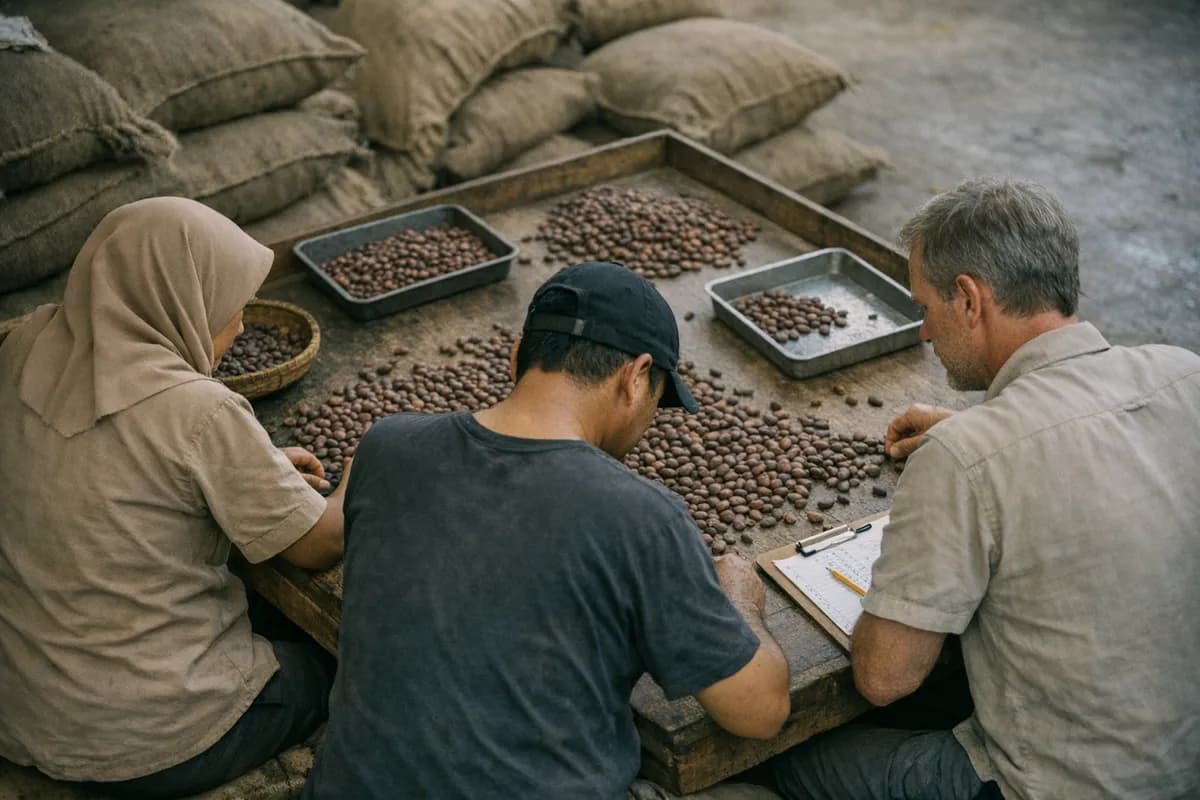
Start with sample identity. The sample label should match the product name, origin, process, grade, lot reference, and proposed packing. If the sample is described as SNI size class A, the bean count test should support that claim. If the sample is sold as fermented Grade A, the cut test and defect checks should also match the contract specification.
Next, check the physical controls. Count beans per 100 g. Measure moisture with your usual receiving method. Cut the beans to inspect fermentation appearance. Review mouldy, slaty, and insect-damaged beans against the agreed tolerance. Check odor and visible foreign matter before running a roast trial.
For shipment paperwork, match the commercial invoice, packing list, bill of lading, certificate of origin, phytosanitary certificate, bag marks, lot reference, Incoterm, and HS code. Document matching does not replace quality testing, but it reduces the risk of receiving the wrong lot or approving a shipment under unclear terms.
The safest sourcing route is simple: specify size class and grade separately, approve a sample against measurable controls, then write the same controls into the purchase order. That keeps SNI bean count in its proper place as a size measure, while the full grade specification protects processing performance.